
Quick Start
The 60-second version
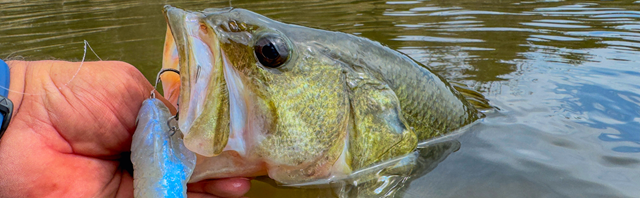
- Go bigger in the prespawn. Bass are feeding up for the spawn — a 4–6 inch swimbait is more meal-sized than most conventional baits you're throwing.
- Match the rig to the cover. Jighead for open water and points; belly-weighted hook for docks, wood, and grass.
- Default go-to: 5-inch swimbait on a 6/0 Owner Flashy Swimmer or BKK Titan Diver belly-weighted hook.
- Body action matters. Wedge tails shimmy (better in cold, clear water). Paddle tails roll and kick (better in stained or warmer water).
- Fish it uphill on points. Cast shallow, retrieve out deep — covers the whole transition and triggers fish moving between staging and spawning areas.
Best Swimbait Approaches for Prespawn Bass
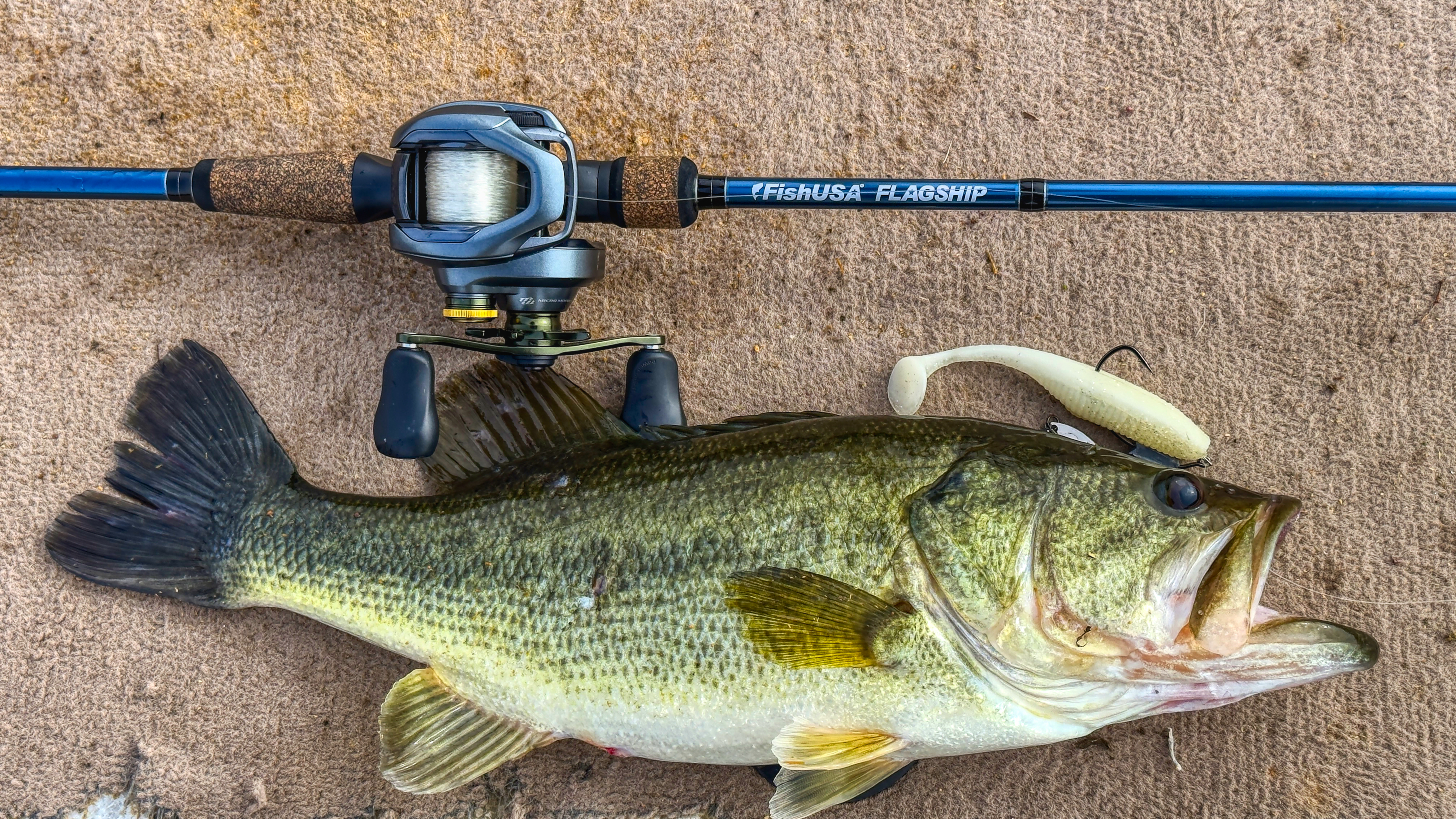
When soft swimbait fishing was in its infancy, there were very few choices. Twenty years later, there may be too many — FishUSA alone carries nearly 100 soft swimbait options, and that's not the full picture of what's available. The good news is that the fundamentals of matching the right approach to prespawn conditions haven't changed, even as the catalog has grown.
Swimbaits come in a wide variety of shapes, sizes, and rigging systems — and that variety exists because the applications are genuinely different. For the prespawn, the focus shifts toward more meal-oriented presentations. Bass are feeding up before the energy demands of the spawn, and going up in swimbait size relative to your normal presentations makes sense. Where you might fish a 3-inch swimbait as a finesse option in summer, a 4–6 inch option is more appropriate in the prespawn.
Choosing a Rigging Method
The right rig depends on what you're fishing around:
Clean Water / Open Bottom
Pre-Rigged Belly Hook Swimbait
If you're fishing relatively clean water without heavy cover, a pre-rigged belly hook swimbait is a streamlined option. The hook is integrated into the body, giving you a clean presentation without a lot of hardware showing.
- Minimal snag risk in open water
- Clean, natural profile
- Easy to fish at various speeds
Grass / Wood Cover
EWG Belly-Weighted Hook
When fishing around grass, laydowns, and wood, an EWG belly-weighted hook rigged more weedless is the better choice. You'll still miss some fish, but you'll get your bait into places a jighead can't go.
- Weedless presentation for heavy cover
- Penetrates grass and rides over laydowns
- Reduced hookset efficiency vs. exposed jighead
Cold Water / Schooled Baitfish
Alabama Rig (A-Rig)
In bodies of water with a lot of smaller baitfish — especially in colder prespawn temperatures — an A-rig loaded with small swimbaits can be dynamite. The multi-bait school profile triggers schooling bass hard.
- Best in colder prespawn locales
- Mimics a baitfish school
- Check local hook-count regulations
The everyday workhorse
Day in and day out, a small swimbait on a jighead or a larger swimbait on a belly-weighted hook like an Owner Flashy Swimmer covers the most prespawn scenarios. Before getting complicated, start here.
The Go-To Prespawn Swimbait Setup
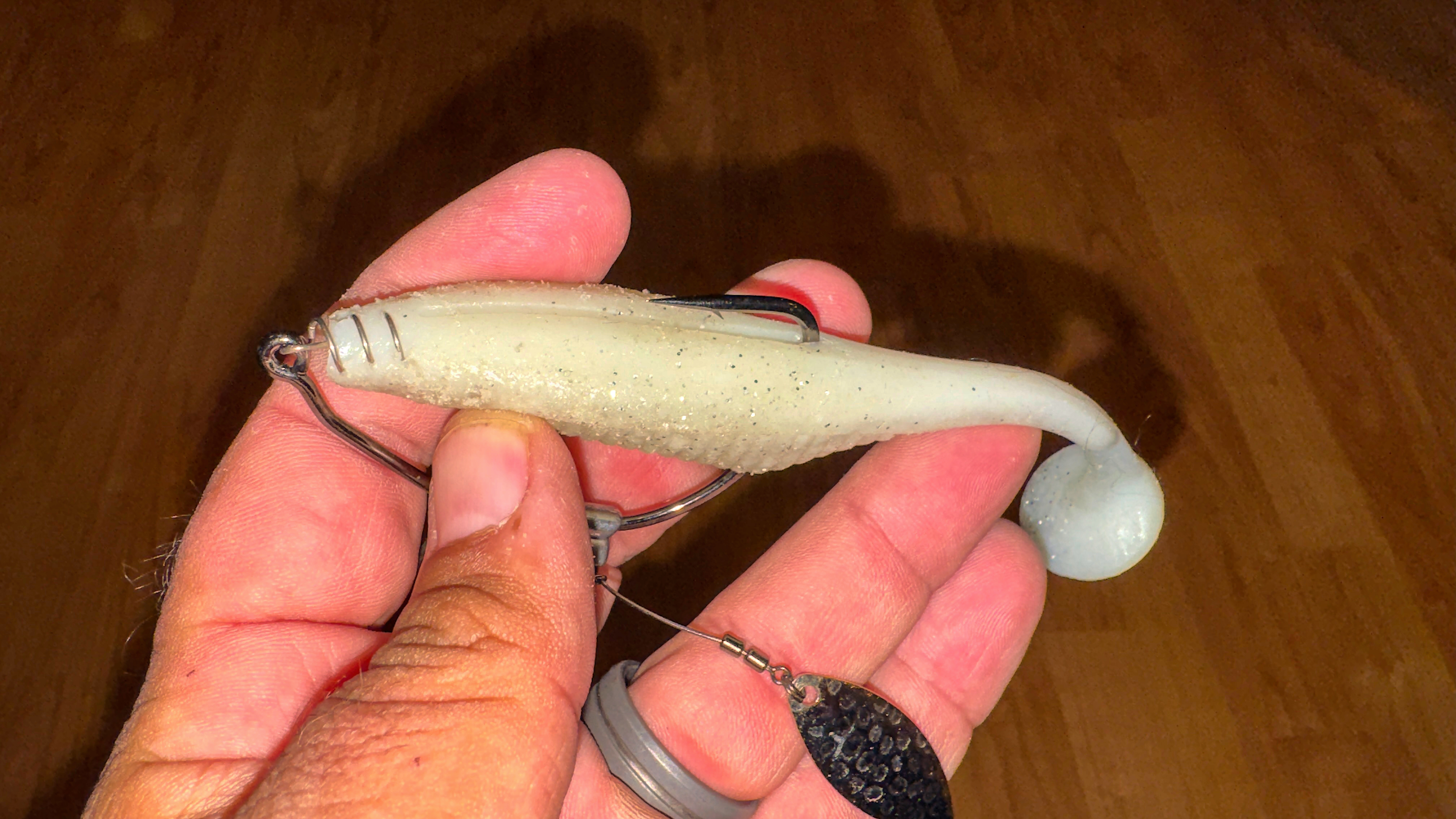
A 5-inch swimbait on a 6/0 Owner Flashy Swimmer is a proven prespawn producer — this rig is responsible for some of the biggest limits and biggest individual bass caught on swimbaits. There's a reason it becomes the go-to once you've experienced what it can do.
The belly-weighted hook allows this rig to do things that most prespawn presentations can't:
- Cast it up shallow and fish it back out deep as you retrieve — covering the entire transition zone in one cast
- Sit deep and throw it shallow, then fish it uphill on a long, deep point (a very productive prespawn move)
- Crawl over laydowns without hanging up
- Ride cleanly through grass
- Skip under floating and stationary docks with practice
- Fish open water equally well when bass are in transition between deep winter staging and spawning flats
Why this rig covers more water effectively
Prespawn bass are transitional fish — they're somewhere between deep winter haunts and their eventual spawning flats. That in-between zone is where this rig shines. You can cover water fast, reach different depths in a single retrieve, and still present a better-than-average quality fish profile. When bass are scattered across transitions, covering water while maintaining a natural profile is more important than any single presentation detail.
Alternate Go-To: Jighead Setup
For points, open water, and scenarios where hook-up ratio is the priority, a 4-inch Keitech FAT Swing Impact on a 1/4 to 3/8 oz ball jighead is a staple — especially for prespawn smallmouths. The jighead gives you a better hook-up ratio than a belly-weighted hook and the FAT Swing Impact's wedge tail produces a very effective shimmy at slower retrieves in cold water.
Keep both rods rigged. The belly-rigged 5-inch for cover and transitions; the jighead 4-inch for open structure. Switch based on what you're fishing, not based on one working better than the other — they're solving different problems.
Go-To Prespawn Swimbait Rig
5-inch swimbait + belly hook + jighead pairing



Swimbait Body Options
With nearly 100 soft swimbait options available and many more beyond what any single retailer stocks, the choice can feel overwhelming. The reality is simpler: most decisions come down to tail style, body width, and plastic formulation — and these determine how the swimbait swims.
Tail Style: Wedge vs. Paddle
| Tail Style | Action | Best Conditions | Example Baits |
|---|---|---|---|
| Wedge / Boot Tail | Shimmy — subtle side-to-side with minimal body roll | Cold, clear water; slower retrieves; when fish are inspecting | Keitech FAT Swing Impact, 6th Sense Divine Swimbait |
| Round Paddle Tail | Body roll with a distinct tail kick — more pronounced action | Stained water, warming temps, when you want more visual movement | Megabass Magdraft, Beast Coast Miyagi Swimmer |
The broader the body and larger the tail, the more pronounced the roll and kick. Narrower bodies with wedge tails have a more subtle, natural shimmy. This matters in the prespawn because water clarity is highly variable — a clear highland reservoir in early spring calls for a different action than a stained lowland fishery with runoff.
Matching action to clarity and temperature
- Cold and clear: Subtle action — narrow body, wedge tail. Let the shimmy do the work without overdoing it.
- Stained or warmer: More action — wider body or paddle tail. More visible vibration draws reaction bites when visibility is reduced.
Notable Prespawn Swimbait Bodies
- Megabass Magdraft Freestyle (5 in): Pre-rigged belly hook design. Has become a dominant dock-fishing swimbait — its profile and belly rig combination skips clean under floating docks and produces big bites from bass holding in shade and depth.
- Keitech FAT Swing Impact (4 in): A staple for prespawn smallmouth and largemouth on a jighead. Consistent shimmy action at slower speeds makes it effective in colder water where you need to slow down.
- Beast Coast Miyagi Swimmer: Versatile paddle-tail body that pairs well with belly-weighted hooks and has a strong track record in prespawn applications.
- 6th Sense swimbaits: Newer options worth experimenting with — quality plastic formulations and profiles that work well in a range of prespawn conditions.
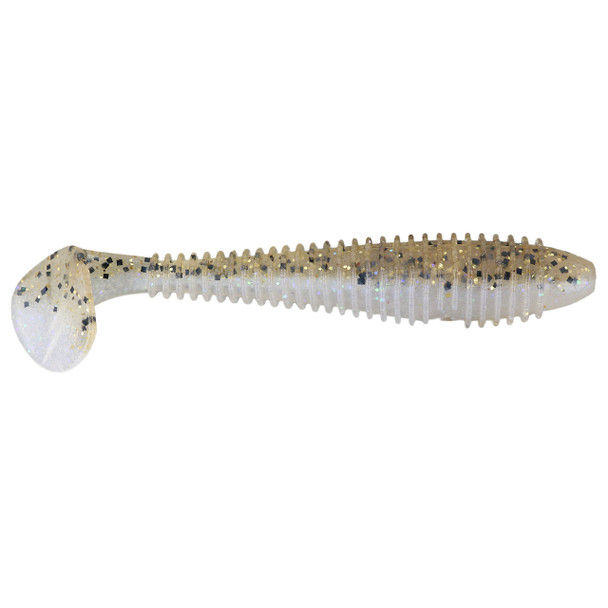
Top Prespawn Swimbait Bodies
Proven wedge tail and paddle tail options for the prespawn window

Pre-Rigged vs. DIY Rigged Bodies
Some swimbaits come with hook harnesses molded in (fully integrated presentation), some come with lead and hook bodies molded around them (pre-weighted), and many are just the plastic body that you rig yourself. Most serious swimbait anglers settle on a few plastic bodies they trust and then work through different hooks and jigheads to find what fits their fishing style.
Rigging Swimbaits for Prespawn Bass
A 4-inch swimbait on a jighead is larger than most finesse baits — but in swimbait terms, it is finesse. Scale matters in context. Understanding the tradeoffs of each rigging method will help you convert more prespawn fish.
Jighead Rigging
A standard ballhead jighead in the 1/4 to 3/8 oz range gives you the best hook-up ratio of any swimbait rigging method. The exposed hook has nothing blocking the gap, and the round head keeps the bait tracking true on a straight retrieve. The VMC Hybrid Swimbait Jig Head is a solid option — it's designed specifically for soft swimbaits and keeps the bait positioned correctly on retrieve.
- Best for: Points, open flats, rock, and any structure without significant snag risk
- Tradeoff: More snag-prone — avoid heavy wood and grass
- Tip: Match jighead weight to current and depth. A 1/4 oz head for shallower work, 3/8 oz when you need more depth or wind is affecting your sink rate
Belly-Weighted Hook Rigging
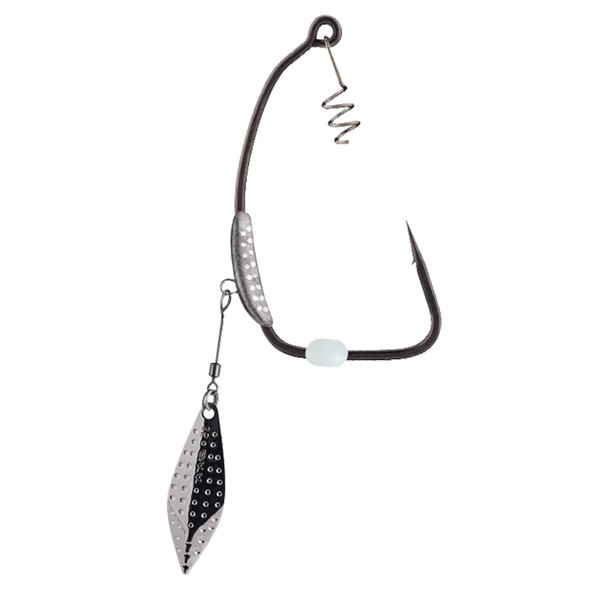
A belly-weighted hook (Owner Flashy Swimmer, BKK Titan Diver, or similar) rigs the swimbait semi-weedless with the hook point buried or barely exposed. The weight is integrated into the hook shank and positions low on the body, keeping the bait tracking correctly on retrieve.
- Best for: Docks, laydowns, grass edges, mixed cover situations
- Tradeoff: You will miss some fish — the hook position means bass can sometimes push the tail up over the hook when running the bait down from behind
- Tip: Push the bait slightly further down the hook shank to increase the gap exposure for better hooksets while maintaining most of the weedless properties
EWG Belly-Weighted Hook
For heavier cover — matted grass, thick wood — an EWG belly hook rigs the bait even more weedless. You'll sacrifice more hookset efficiency, but you'll fish places other rigs can't access. This is the setup when you need to punch through cover to reach bass that are buried in it.
Missed fish are part of swimbait fishing
Accept that belly-rigged swimbaits will miss a percentage of strikes — it's the nature of the rig and the way bass attack swimbaits. Don't abandon the setup when you miss a fish. Instead, make the same cast again immediately. Bass that miss a swimbait often come right back, especially in the prespawn when their feeding aggression is high.
The recommendation: settle in on a few swimbait body styles you trust, then find jigheads and hooks that fit how you fish — not what someone else recommends. Hook preference is personal and situational. Try a few, fish them in your actual conditions, and build your system from what converts fish on your water.
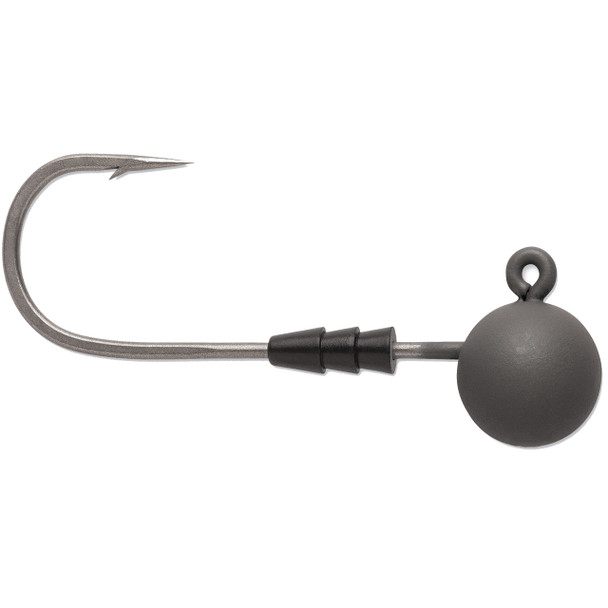
Swimbait Hooks & Jigheads
Belly-weighted hooks and ballhead jigheads for the prespawn swimbait system
Other Thoughts on Prespawn Swimbaits
Don't Overlook Size Perspective
When you put a 4, 5, or 6-inch swimbait next to most conventional bass lures, they're bigger than their counterparts in nearly every category. These are not small presentations, even though they feel natural in your hand. This size advantage is actually a feature in the prespawn — bass looking for a meal are more likely to commit to a bait that represents a real return on energy invested.
Soft Swimbaits in Clear-Water Prespawn Conditions
Clear-water prespawn situations — early spring fisheries that haven't had significant runoff, highland reservoirs, Great Lakes systems in cold conditions — favor soft swimbaits over more intrusive presentations. A swimbait can be a much more natural presentation than crankbaits, spinnerbaits, or chatterbaits in clear, cold water. Rather than spooking fish that might blow off louder or more aggressive presentations, a swimbait draws them in without announcing itself.
Soft Glide Baits Are Worth Exploring
In recent years, soft glide baits have become more prominent as anglers have discovered that softer, more weedless versions of big hard glidebaits can produce in situations where the hard baits are impractical. If you're already fishing swimbaits regularly in the prespawn, experimenting with soft glides is a natural next step — especially around dock and laydown cover where a hard bait can't be fished effectively.
If swimbaits aren't in your prespawn rotation yet
Anglers who add soft swimbaits to their prespawn rotation consistently report upgrading the average quality of fish they catch — not necessarily the total count, but the size. If you've been fishing swimbaits occasionally, try making one rod a dedicated swimbait rod for an entire prespawn season. The pattern becomes clearer when you're putting time in on the bait rather than picking it up and putting it down.
Read Next
FAQ
A 4–6 inch swimbait is the prespawn sweet spot. Bass are feeding up for the energy demands of spawning, so they're oriented toward larger meals. Going up in size relative to your normal presentations makes sense. A 4-inch Keitech FAT Swing Impact covers finesse applications, while a 5–6 inch belly-rigged swimbait like the Megabass Magdraft handles bigger-bite situations near dock and wood cover.
A wedge tail (or boot tail) produces a shimmy-style side-to-side action, while a round paddle tail generates more of a body roll with a distinct tail kick. Narrow bodies with wedge tails have a more subtle, natural action — better for cold, clear prespawn water. Wider bodies with paddle tails produce more pronounced movement — better when water is stained or warming up. Match the action intensity to water clarity and temperature.
Two dominant options: a belly-weighted hook like the Owner Flashy Swimmer (6/0 for a 5-inch bait) for open water and light cover, or an EWG belly-weighted hook for heavier grass and wood. Belly hooks rig the swimbait semi-weedless. Jigheads (1/4 to 3/8 oz) give you better hook-up ratios but are more snag-prone. Match the hook style to the cover you're fishing, not a blanket preference.
Use a jighead in open water, over points, and in areas without significant snag risk — it gives you the best hook-up ratio. Use a belly-weighted hook when fishing around docks, laydowns, grass, or wood where weedlessness matters. The tradeoff is real: belly-rigged hooks miss more fish, but they let you fish productive cover that a jighead can't access without getting snagged on every cast.
A 5-inch swimbait on a 6/0 Owner Flashy Swimmer belly-weighted hook is a proven prespawn producer. It casts well, handles shallow to deep retrieves, skips under docks, rides through grass, and crawls over laydowns. Pair it with a 4-inch Keitech FAT Swing Impact on a 1/4 to 3/8 oz ballhead jighead for open-water and point fishing. Keep both rigged so you can match the cover without retying.
A belly-rigged swimbait like the Megabass Magdraft on an Owner Flashy Swimmer or BKK Titan Diver is ideal for dock fishing. The semi-weedless rig skips cleanly under floating and stationary docks and rides through dock hardware without constant snags. Stationary and floating boat docks are a dominant prespawn location — shade, depth access, and baitfish draw transitioning bass in the prespawn window.
Short strikes on swimbaits are usually bass trying to kill the bait rather than eat it — normal swimbait behavior. They'll swipe from behind or push the tail up over the hook. To improve conversion: slow your retrieve slightly; push the hook point higher in the bait to create more gap; try a slightly larger hook; or consider a stinger trailer hook if legal and practical. Immediately re-casting to the same spot after a short strike often draws a committed follow-up.
Yes — an Alabama rig loaded with small swimbaits can be highly effective in the prespawn, especially in colder water where bass are schooled up and keyed on baitfish. It works especially well on reservoirs with shad or perch as primary forage. Be aware of A-rig regulations — some states limit hook count — and check local rules before using one.
Cast shallow and retrieve uphill toward the boat. This presents the bait moving from staging shallows toward deeper water — the opposite direction bass are traveling — which triggers reaction and feeding strikes as the swimbait appears to be fleeing. A belly-rigged swimbait excels here because you can start it shallow, maintain contact as it moves up the slope, and cover the entire depth transition in a single retrieve. This uphill retrieve on long, deep points is one of the most effective prespawn swimbait moves.
Soft swimbaits offer more versatility in the prespawn — they can be rigged weedless, skip under cover, work uphill over structure, and feel more natural when bass mouth them. In clear-water prespawn conditions, soft swimbaits are often a less intrusive presentation than crankbaits, spinnerbaits, or ChatterBaits. Hard swimbaits produce big bites but are less adaptable to different cover types. Most prespawn anglers keep a soft swimbait rod rigged alongside reaction baits and pick between them based on water clarity and cover.