
Quick Start
The 60-second version
- Start with Drag + Pause in cold, clear, or slow-bite conditions. Default cadence for any water under 50°F.
- Use Glide (Lift-and-Glide) when covering a breakline edge or when you want more hang-time in front of fish.
- Go to Snap + Settle to trigger reaction bites — active fish, wind chop, fish following but not committing.
- Change cadence before color: Drag → Glide → Snap is a complete rotation. Run it before touching the tackle box.
- If you can't feel the bottom: go heavier first. Cadence is irrelevant without bottom contact.
Cadence Decision Rules
Three cadences. One simple decision: what are conditions telling you? Start at the top and work down. Don't skip to snap if you haven't tried drag — most cold-water fish are caught on the first two cadences.
Cadence 1 — Default
Drag + Pause
Start here every time
The foundation cold-water cadence. Slow, controlled bottom contact with defined pauses. Fish take on the pause or the load-up at the start of the next drag.
- Water is cold (below 50°F)
- Bites feel "soft" or like nothing
- You're marking fish but not hooking up
- Water is clear and fish are inspecting
- Post-cold-front stabilization
Cadence 2 — Coverage
Glide / Lift-and-Glide
Use on edges + structure
Smooth lift that lets the jig glide forward on semi-slack, covering more horizontal ground per move with a longer hang-time. Fish see it moving without chasing.
- Working a long break or point
- Fish are suspended slightly above bottom
- Drag produces nothing and snap feels too aggressive
- You want to cover more edge without racing
Cadence 3 — Trigger
Snap + Settle
Use when fish need a trigger
Sharp 6–12 inch pop followed by a controlled fall on semi-slack line. Generates reaction strikes from fish that are active but won't commit to a slow presentation.
- Fish are following but not eating
- Wind chop and active feeding behavior
- Water 48°F+ with some fish aggression
- Rocky bottom where contact noise helps
The simple cadence rotation
- Drag + Pause — 15–20 minutes on a section of break. If nothing: step 2.
- Glide — same section, different look and fall angle. If nothing: step 3.
- Snap + Settle — trigger attempt. If nothing: check depth, angle, and weight before switching spots.
One change at a time. Don't switch cadence and profile simultaneously — you won't know which variable produced the bite.
Temp + Mood Cheat Sheet
Temperature is a proxy for activity level, but wind, water clarity, and current modify it. A 48°F day with a sustained south wind and chop is fished differently than a 48°F post-front day with dead-calm bluebird skies. Use the table as a starting point and adjust for actual conditions.
| Condition | Best Starting Cadence | Change First | Notes |
|---|---|---|---|
| 36–44°F or very clear + calm |
Drag + Pause | Pause longer; shrink profile | Bottom contact is everything. Bites feel like extra weight — watch the line. Pauses of 5–8 sec in colder part of this range. |
| 44–48°F light chop, stable weather |
Drag or Glide | Add small snaps on Drag; shorten pause | Best all-around window. Both cadences can work. Let fish tell you which — mark activity on sonar before committing. |
| 48–55°F windy or stained |
Snap + Settle or Glide | Increase weight; maintain contact | Fish are more active. Triggers work. Don't sacrifice contact for action — heavier head keeps the jig in the zone. |
| Short strikes / bumps any temp |
Drag + Pause | Longer pause; smaller profile | Fish is interested but not loading up. Pause and stay dead-still after the bump — they often return. Don't speed up. |
| No feel / drift too fast any cadence |
Any | Go heavier first | Control is the prerequisite to cadence. A jig that can't reach the bottom isn't fishing, regardless of how good your rod action is. |
| Post-cold-front bluebird, stable pressure |
Drag + Pause (very slow) | Extend pause to 6–8 sec; finesse profile | Fish are lockjaw. Dead-slow drag + long pause is the only cadence that reliably works. Minnow or ringworm over paddletail. |
Pair this table with
Jig weight chart by depth + wind — find the right weight before dialing cadence.
Spring water temp triggers (36–60°F) — how temperature changes fish location and behavior.
Match Plastic Profile to Cadence
Profile affects how your cadence translates into action. The same drag motion looks totally different with a paddletail vs a straight-tail minnow. Match profile to cadence and conditions — don't fight them against each other.
Profile 1
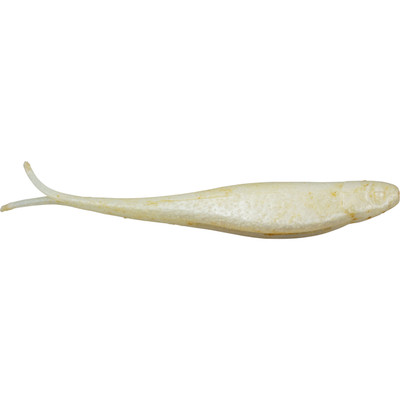
Paddletail
Best with: Glide + controlled drag
The tail vibration does the work — it generates action even on a slow, steady drag. Too much snap or aggressive popping can make the tail spin unnaturally.
- Glide: tail kicks on the fall, draws fish from distance
- Controlled drag: steady thump, covering structure quickly
- Light snap: works when fish are active (48°F+)
- When to use: scattered fish, searching water, temps above 46°F, stained water
Profile 2
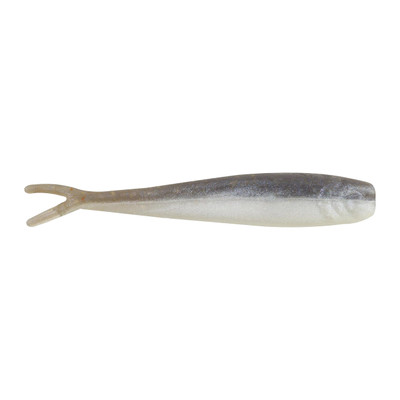
Minnow / Straight Tail
Best with: Drag + Pause
Minimal self-generated action — it looks alive only when the cadence is giving it subtle movement. Demands precise drag-and-pause execution but produces in the toughest conditions.
- Slow drag: natural glide with minimal tail kick
- Long pauses: bait lies flat on bottom, highly natural
- Tiny lifts + drops: almost no action = subtle profile
- When to use: very cold water, clear water, post-front, bites are light, fish tight to bottom
Profile 3
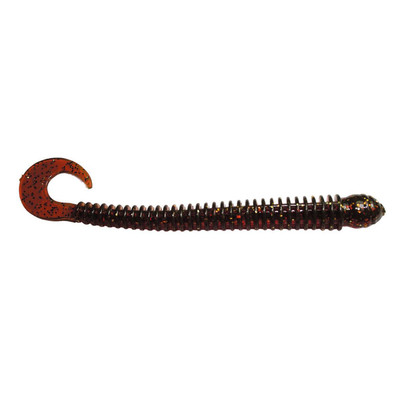
Ringworm
Best with: Slow drag + micro-hops
The thin profile and segmented body pulses subtly during even the slowest drags. Falls slowly on a near-slack line with a quivering action that's hard to replicate with thicker profiles.
- Slow drag: body ripples naturally in current or drift
- Dead pause: tail still quivers from water movement
- Micro-hops: minimal lift creates big fall response
- When to use: short strikes, finicky fish, current seams, very slow presentations
Walleye Soft Plastics — 3-Profile Kit
One paddletail, one minnow, one ringworm — covers every cadence and condition in the guide above

How to Work Each Cadence
Exact mechanics for each cadence. Read these once, then go fish. The details matter more at 40°F than at 55°F — precision is rewarded in cold water.
Cadence 1 — Default
Drag + Pause
- Establish contact. Drop to bottom. Feel the tick. Lift slightly to confirm the jig is just off bottom, then lower it to rest.
- Slow drag. Move the jig 6–18 inches across the bottom. Rod tip moves from 8 o'clock to 9 o'clock — small, deliberate. Less than 4 inches per second.
- Full stop. Pause 2–6 seconds (longer in colder water). Keep the rod still. Watch the line for a tick, subtle bow, or the line going slack when it shouldn't.
- Reset and repeat. At the end of your drag, reel in slack and start again. Don't rush the reset — that reel-down is also fishing time.
Bite detection: Most bites feel like the jig is slightly heavier at the start of the next drag, or the line goes oddly slack during the pause. Set on anything unusual.
Cadence 2 — Coverage
Glide / Lift-and-Glide
- Contact first. Same as drag — establish bottom, feel the tick.
- Smooth lift. Raise the rod from 8 o'clock to 11 o'clock slowly and steadily — not a snap. The jig rises off the bottom and glides forward as line goes semi-slack.
- Controlled fall. Lower the rod at the same speed the jig is falling — keep just enough tension to feel the fall without pulling the jig sideways. The glide arc is the strike zone.
- Brief bottom pause. 1–2 seconds on the bottom, then lift again. Bites come on the fall or the instant it touches down.
Key detail: The fall angle on the glide is what differentiates it from drag — fish see it falling at a different trajectory. Vary lift height to change how far the jig swings.
Cadence 3 — Trigger
Snap + Settle
- Contact first. Let it touch bottom cleanly before every snap sequence.
- Sharp pop. Quick wrist snap that moves the rod tip 6–12 inches. Not a full arm swing — it's a wrist flick. The jig jumps off the bottom and kicks up.
- Controlled settle. Lower the rod immediately after the snap to give the jig semi-slack to fall on. If you hold the rod up, the jig swings back on a tight line — that's not a natural fall.
- Short pause. 1–2 seconds. Repeat. Bites come on the fall, immediately after the snap, or at the end of the short pause.
Common mistake: snapping too hard and too often. Two snaps, settle, assess. If no bite after 3–4 reps, drop back to drag or move.
If you're not sure, start here
Drag first. If you're not feeling bottom, go heavier before changing cadence. If you're getting bumps, slow down and pause longer. The three-cadence rotation is a last-resort sequence — most fish in cold water are caught on a well-executed drag + pause before you ever need to try glide or snap.
Common Mistakes
All four of these mistakes are cadence or contact problems — not color problems. Fix them in order before reaching for a different bait.
Troubleshooting (Change This First)
Four specific problems, each with a defined first fix. Run the fix before moving to a new spot or switching rigs.
Problem 1
Short strikes + bumps without hookups
- Add 2 seconds to every pause — stay completely still
- After a bump, dead-stop for 4–5 sec; fish often return
- Switch from paddletail → minnow or ringworm
- Check hook position — ensure the plastic is straight on the hook
- Do NOT speed up or snap after a short strike
Problem 2
No bites but fish are "in the right place"
- Drag + Pause (standard speed) → 15 min
- Glide (longer hang-time, different angle) → 15 min
- Snap + Settle (reaction trigger) → 10 min
- If nothing: adjust depth along the same edge before moving
- Check sonar — are fish actually there, or just marks?
Problem 3
Can't feel the bottom
- Step up one weight increment (e.g., 1/8 → 3/16 → 1/4 oz)
- Shorten your cast; fish more vertically
- Point rod tip lower toward the water surface
- Slow the drift with a drift sock if needed
- Cadence is irrelevant without contact — fix this first
Problem 4
Snagging constantly
- Go one weight step lighter to reduce bottom drag
- Switch to a lift/glide cadence instead of constant drag
- Change your boat angle relative to the structure
- Try a weed guard or exposed-hook keeper jig head
- Most snagging is a line angle problem, not a weight problem
Want the full system?
Cadence, weight, rod, line, and leader all work together. If you've dialed in cadence and are still struggling, the issue may be rod sensitivity or line diameter — both are covered in the Spring Jigging Setup guide.
Read Next
FAQ
Drag + Pause is the default cold-water cadence. Drag the jig slowly 6–18 inches, pause 2–6 seconds (longer in colder water), repeat. The bite usually comes on the pause or the instant the jig loads up at the start of the next drag. Only switch to glide or snap after drag + pause has had a full trial on a section of break.
Change cadence first — always. The rotation before touching the tackle box: slow your drag → extend the pause → try glide → try snap. If none of those produce, downsize your profile. Color is the last variable to change. In cold water, a minnow on a slow drag outperforms the same minnow in a "better" color on a faster retrieve more often than not.
Start at 2–3 seconds and extend from there. In very cold water (36–44°F), pauses of 5–8 seconds are appropriate. If you're getting short strikes or bumps, extend the pause by 2 seconds and stay dead still. In some post-front situations, a 6–8 second dead pause after a near-motionless drag is the only thing that produces — try it before moving.
Short strikes mean the fish wants the bait but isn't committing. Fix in order: (1) pause longer after the next drag — 4–5 seconds, stay completely still; (2) slow the drag speed; (3) downsize profile — switch from paddletail to minnow or ringworm; (4) check hook position on the plastic. Don't speed up or increase snapping when getting short strikes — that moves fish away.
A straight-tail minnow or finesse minnow (3–4 in) is the most consistent cold-water producer. It has minimal self-generated action and relies on your cadence to look natural. A ringworm is the go-to finesse option when fish are short-striking — the slow flutter fall and thin profile draw committed bites when the minnow draws bumps. Paddletails work better once temps push past 46–48°F and fish are more active.
Switch to snap + settle when fish are active (temps 48°F+), there's wind chop and aggressive feeding behavior, you're getting follows but no commits, or you're fishing rock where the jig contacting bottom helps attract fish. Snap jigging is a trigger technique — it works when fish are willing to move. In cold, clear water with reluctant fish, snap jigging usually moves them away.
Glide (or lift-and-glide) means lifting the rod smoothly 1–2 feet and letting the jig arc forward on semi-slack line before settling. The jig covers more horizontal distance than a drag with a longer hang-time. Use it when working a long breakline without racing through it, when fish are holding slightly off bottom, or when drag isn't drawing strikes and snap feels too aggressive.
Watch the line where it enters the water, not the rod tip. Cold-water bites are usually: the jig feeling slightly heavier at the start of the next drag (fish picked it up during the pause), the line going briefly slack when it shouldn't, or a tick or twitch during the fall or pause. Set on anything unusual — many cold-water fish are lost because the angler waits for a thump that never comes.
Less so. In warmer water (50°F+), walleyes are more active and will commit to a wider range of cadences — you have more margin for error. Cold water (below 46°F) is where cadence is most critical because fish metabolize slowly and are much more likely to reject a bait that moves too fast. Cadence sensitivity is inversely proportional to temperature: colder = matters more.
No — fix weight first. If you can't detect bottom contact, cadence selection is irrelevant. Your jig is sweeping off the bottom and out of the strike zone regardless of action. Go heavier one step at a time until you feel a distinct tick on every land. The sequence is always: contact first → cadence → profile → color.