
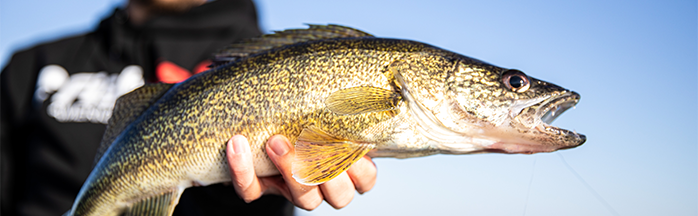
Quick Start: Jig or Troll Today?
Read the conditions first. Here’s the short version — use the full decision tree below when you need more nuance.
Start jigging when:
- Fish are marked on a specific break, reef, or structure edge
- Wind is under 15 mph and you can hold a controlled drift
- Water temps are below 55°F and fish are pinned to hard bottom
- You’re working a tight piece of structure where boards would be impractical
- You have a productive spot and want to maximize time on it
- Drift control is possible with a sea anchor or kicker motor
Start trolling when:
- Fish location is unknown and you need to cover water to find them
- Wind is above 15–20 mph and jig control is unreliable
- There’s a visible mud line or water color edge to cover
- Fish are scattered or suspended rather than stacked on structure
- You have limited time and need to find a pattern quickly
- Fish are deep (25+ ft) and divers/boards give you better depth control
Default to the hybrid plan when:
- You have a full day and don’t have strong pre-trip intel
- Conditions are borderline (10–15 mph wind, some marks but scattered)
- You want to both locate fish efficiently and maximize conversion
Change ladders (bookmark this)
Trolling not working: Speed (0.2 mph up/down) → Lead length (25 ft) → Bait profile → Color. Jigging not working: Weight/contact → Cadence/pause → Profile → Color. Color is almost never the first problem on Erie — it’s depth and speed control.
The Decision Tree
Start at the top. The first honest answer about your conditions routes you to the right method before you touch a rod.
Step 1 — Are fish concentrated or scattered?
- Concentrated (marks on a known break, reef, or structure edge) → go to Step 2.
- Scattered or unknown (no strong intel, no marks yet, first trip to the area) → START TROLLING. Cover water first. You can’t jig fish you haven’t found yet.
Step 2 — Can you control your drift?
- Yes (wind under 15 mph, sea anchor available, or protected water) → go to Step 3.
- No (wind over 15–20 mph, open water, no drift control) → START TROLLING. Jigging with no drift control means your bait spends more time blowing sideways than in the strike zone.
Step 3 — How deep are the fish?
- Under 25 feet with manageable chop → START JIGGING. Fish are concentrated, drift is workable, depth is manageable. This is the ideal jigging scenario.
- 25+ feet or heavy chop making bottom contact inconsistent → START TROLLING. Use boards with long leads or divers to reach the depth zone efficiently.
Step 4 — Is there a mud line or water color edge?
- Yes (visible seam within reach) → TROLL THE SEAM regardless of fish concentration. The mud line is a feeding highway — trolling parallel to it almost always outperforms randomly jigging clean water nearby.
- No (uniform water color) → Proceed with your Step 2/3 answer. Uniform Erie green favors jigging when fish are located.
Step 5 — How much time do you have?
- Full day (5+ hours) → HYBRID: troll 45–60 min to locate, then jig to convert. Repeat as fish move.
- Short trip (under 2 hours) with known spot → JIG. Go straight to the spot, maximize time on fish.
- Short trip without intel → TROLL. Cover water fast, find fish, make the most of limited time.
Decision Summary Table
| Condition | Fish Status | Wind / Control | Call |
|---|---|---|---|
| Known break/structure, calm | Concentrated, marking | < 15 mph, driftable | Jig |
| Known break, rough | Concentrated, marking | 15–20+ mph | Troll or hybrid |
| Mud line present | Likely along seam | Any | Troll the seam |
| Open water, no intel | Unknown / scattered | Any | Troll to locate |
| 25+ ft, fish suspended | Scattered / deep | Any | Troll (boards/divers) |
| Cold water (sub-50°F) | Stacked on structure | Calm to moderate | Jig |
| Full day, no intel | Unknown | Any | Troll 45–60 min, then jig |
Three “Today Scenarios”
Scenario A — Early May, calm morning, water 52°F, known reef
Fish are stacked on a shallow reef in 12–16 feet. Wind is 8 mph forecast. You have 4 hours. Call: Jig. Drift the reef’s clean edge with 3/8 oz heads, minnow bodies in natural colors. Work the down-current side of the structure. Pull boards only if bites die and fish scatter off the top.
Scenario B — Late May, 18 mph SW wind, mud line visible from ramp
Wind pushed turbid water in overnight. A visible seam runs east–west 2 miles out. No specific fish intel. Call: Troll the seam. Set boards on the clean side, run high-contrast baits into the stained edge. Mark waypoints along the seam, run parallel passes. Don’t jig until you’ve located the active zone on sonar.
Scenario C — June, uniform green water, fish suspended at 22 ft, light wind
Sonar shows fish marks but they’re suspended mid-column, not hugging bottom. You can jig, but the suspended fish don’t commit. Call: Hybrid. Run boards with crankbaits at 22 ft using lead length + line diameter depth charts. When you find a feed zone with commits, pull to that spot and jig the concentrated school.
What to Check Before Deciding
Six inputs determine your method before you ever start the engine. Run through this checklist at the ramp or the night before.
1. Water Temperature
Temp drives fish behavior more than anything else. Below 50°F, fish are cold, slow, and pinned to structure — ideal jigging. Between 50–58°F, pre-spawn movement begins and fish are aggressive but still location-dependent. Above 60°F, fish scatter and suspend, favoring search trolling. Full water temp trigger chart →
2. Water Color and Clarity
A mud line or stained water edge changes everything. If a seam exists anywhere near your planned area, troll it first — regardless of what your jigging plan was. Walleye concentrate on clarity transitions reliably. In uniform water, color doesn’t affect method choice but does affect bait selection. Erie water color playbook →
3. Wind Speed and Drift Control
Check the forecast and the wind history. A calm morning can become 20 mph by noon on Erie. If wind above 15 mph is expected within your window, rig trolling gear. If you’re committed to jigging: will a sea anchor or your kicker motor give you adequate drift control in the expected chop? If not, have boards ready.
4. Depth of Fish
Check yesterday’s reports or known structure depths. If fish are in 8–20 feet on hard bottom, jigging is the precise tool. If fish are suspended at 22+ feet or buried in deep structure, boards with long leads or divers are more efficient. Jig weight selection chart →
5. Bait Presence and Fish Behavior
Watch your sonar on the way to the spot. Tight arcs near bottom = fish feeding actively on structure — jig. Scattered mid-column clouds or loose arcs = suspended or dispersed fish — troll. Big flat schools of bait without fish marks below them = fish are somewhere else, keep trolling until you find the edge of the bait school.
6. Boat Traffic and Space
Weekend Erie traffic makes trolling with full boards more difficult near high-use areas. If a key structure is crowded with anchored and drifting jig boats, trolling through it will create conflict. Assess whether you have clean lanes to run boards before committing to a trolling plan. If not, join the jigging fleet and work the structure systematically.
When Jigging Wins on Lake Erie
Jigging is Erie’s most precise tool. It’s the right call when you know where fish are and conditions let you stay on them.
Best Jigging Conditions
- Cold water (water temps 40–55°F): pre-spawn and spawn staging fish stack on shallow reefs and gravel breaks in the western basin. Jigging lets you stay directly on the school and work every fish in it.
- Concentrated fish on structure: when sonar shows clear bottom-hugging arcs on a specific reef edge, break, or rock pile, jigging is faster to convert than making multiple trolling passes.
- Controlled drift conditions: winds under 15 mph, or heavier winds with a sea anchor or kicker motor. Without drift control, jigging becomes random rather than precise.
- Pressured, finicky fish: a 1/4 oz jig fished slowly is a subtler presentation than a crankbait. In late morning when boat traffic has pushed fish and they’re short-striking boards, dropping back to a jig often triggers the hesitant fish.
Start Jigging Like This
Erie jigging mini-plan
- Weight: start at the lightest head you can maintain contact with through the drift. In 15 ft of calm water, that’s typically 1/4 oz. In 20 ft with 1–2 ft chop, 3/8 oz. If you can’t feel bottom on every drop, go heavier one step. Full weight chart →
- Cadence rotation: start with a drag-glide (slow lift and let it fall on semi-slack). If no bites in 10 minutes, try a snap-drop (sharp 12–18 inch pop, let fall). Pause 2–4 seconds on the bottom on every presentation.
- Profile order: minnow body (tight imitation of shiners) first in clear water → paddletail (more action) if bites are slow → ringworm when fish are short-striking the tail.
- Position: work the down-current side of structure first. Drift over the top, mark fish on the down side, then reposition to let the bait come off the break edge naturally.
When Trolling Wins on Lake Erie
Trolling covers water. When fish are scattered, moving, or deep — or when wind has made jigging control unreliable — boards and crankbaits find fish jigging can’t reach.
Best Trolling Conditions
- Unknown or scattered fish: trolling covers 2–3 times more water per hour than a jigging drift. When you don’t have a confirmed spot, trolling locates fish faster.
- Wind over 15–20 mph: instead of fighting for jig contact, use the wind. Troll with the wind or across it. Erie boards handle chop well when boards are set properly and release tension is checked.
- Mud line or water color edge present: you can’t systematically work a 4-mile mud line seam with a jig. Boards let you cover the entire productive strip with multiple lines at different depths simultaneously.
- Suspended or deep fish: crankbaits on long leads or divers reach depths and depth windows that are impractical with a standard jig. If fish are at 28 feet and suspended off bottom, trolling is the tool.
Start Trolling Like This
Erie trolling mini-plan
- First spread: 4 rods — two inside at 50 ft lead, two outside at 80–90 ft lead. Cover shallow, mid, and deep depth zones with different diving depths. Full board setup guide →
- Depth coverage: use lead length + line diameter to dial in specific depths. Note which lead produces the first bite and duplicate it on matching rods. Lead length chart →
- Speed: start at 1.8–2.0 mph GPS. This is the first variable to change when bites slow — adjust 0.2 mph up or down and run a full pass before evaluating. Speed control guide →
- Change ladder: speed first → lead length → bait profile → color. Resist the urge to pull boards and cycle colors — that resets your pattern clock.
- When to add divers: once your board spread is running cleanly and fish are at 25+ feet. Divers require adjusted turn technique — boards must come in before turning across diver lines. Divers guide →
Hybrid Day Plan (Most Useful for Erie)
The most consistent Erie anglers don’t commit to one method at the ramp. They troll until fish reveal themselves, then jig to convert — and repeat the cycle all day as fish move.
The 3-Step Erie Hybrid Plan
Step 1 — Troll to locate (45–60 minutes)
Launch with boards set. Cover the area you want to fish with a systematic grid or parallel seam passes. Goal: find active bites and the depth/location of fish. Don’t change method until you’ve run the full change ladder (speed → lead → bait). Mark waypoints wherever bites occur. Note the depth, the lead that produced, and the water color at the bite location.
Step 2 — Pull boards and jig the concentration (20–30 minutes)
Once you’ve marked 2–3 bites in the same area, or found a dense school on sonar, pull boards and position the boat to drift over the productive zone. The trolling pass revealed the depth and zone — now the jig works it systematically and converts the concentrated fish. Jig with the same depth and similar bait profile as whatever trolling produced.
Step 3 — Repeat and refine
Fish move along seams and structure edges through the day, especially as boat traffic increases. When jigging production drops, put boards back out and troll along the edge to find where fish moved. You’re always asking: “where did the fish go?” and trolling gives you the fastest answer. Reset your search pass whenever jigging goes 20+ minutes without a bite in good-looking water.
Time-Boxing Rules
- Trolling search pass: give it 45–60 minutes before declaring a location dead. Erie fish move, and a spot that was empty an hour ago may be loaded now.
- Jigging a spot: if a jigging location doesn’t produce in 20–25 minutes after good sonar marks, pull off. The fish have likely moved or gone negative.
- Method change: don’t switch from jigging to trolling (or back) in under 20 minutes. Changing constantly resets your data and means you never get a fair read on either presentation.
- Morning vs. afternoon: early morning fish are often concentrated and actively feeding — jig first if you have a spot. Midday and afternoon fish often scatter with boat pressure and warming water — troll to relocate them.
Pre-rig both setups before you launch
Have jig rods pre-rigged and boards already mounted so the transition from one method to the other takes 5 minutes, not 20. The faster you can switch, the more accurately you can react to what the fish are doing rather than what you planned to do.
Spotting Fish and Finding “The Edge”
Whether you’re jigging or trolling, Erie walleye relate to edges — structure edges, depth transitions, and water color seams. Finding the edge before you start fishing saves hours of unproductive water.
The Mud Line Edge
The most reliable Erie edge on any windy day is the visibility seam between clean (or green) water and stained water. Walleye use it as an ambush lane — they can see into the cleaner water while holding in the low-light comfort of the stain. Troll parallel to this seam, not through it randomly. Most bites come in the first 10–20 feet of stained water. Full mud line tactics →
Wind Push Logic
Southwest and west winds push bait and fish northeast across the western basin. If you know where the wind has been blowing for the past 12–24 hours, you can predict where bait concentration has built up and where walleye followed it. Fish the downwind side of major structure features and the east side of reefs after a prolonged west blow.
Follow the Bait First
When your sonar shows large schools of emerald shiners, don’t start jigging the bait school directly. Look for where the bait school ends and structure begins — that’s the ambush zone. Walleye herd bait against hard structure edges, not open water. Troll past the bait toward the structure edge, or jig the structure break adjacent to the bait cloud.
Structure Transitions
Erie’s western basin is predominantly flat sand and gravel with scattered rock piles and reefs. The most productive edges are where sand turns to gravel, where gravel turns to rock, and where rock drops into softer bottom. Use your sonar’s bottom hardness readout (or bottom color/thickness on most units) to identify these transitions while trolling, then return to jig them precisely.
4 Common Mistakes on the Jig vs Troll Decision
1. Forcing Jigging in Wind You Can’t Control
Committing to jigging in 18+ mph wind because that was the plan is one of the most common bite-killing decisions on Erie. Without drift control, your jig spends more time dragging sideways than falling vertically — it’s an inefficient presentation and you’re not actually covering the structure you think you are. If you can’t feel the jig clearly on every drop, put boards out.
2. Trolling Without a Plan (Changing Everything at Once)
Pulling boards and cycling through bait colors, then changing speed, then changing lead length — all in the same 20-minute pass — gives you zero usable data. If the first pass didn’t produce, you don’t know why. Change one variable at a time, run a full pass, evaluate. Start with speed. Then lead length. Then bait profile. Color last.
3. Not Time-Boxing Search vs. Convert
The anglers who frustrate themselves most are the ones who troll for 20 minutes, declare the trolling dead, jig for 15 minutes, declare jigging dead, and repeat all day. Neither method got a fair trial. Decide in advance: troll for X minutes before switching. Jig for Y minutes before repositioning. The discipline of time-boxing is what makes the hybrid plan actually work.
4. Ignoring the Water Color Edge
Arriving at Erie, seeing a mud line, and then going to your planned jigging spot 3 miles away is one of the most common missed opportunities on the lake. A mud line seam that’s present is almost always the highest-percentage location until proven otherwise. Check for it on the way to your spot — if one exists nearby, it earns a look before you commit to any other plan.
Gear: Build the Right Kit for Each Method
You don’t need to carry gear for both methods every trip — but knowing what each kit requires lets you plan efficiently.
If you’re jigging today (5 essentials)
- Jig heads in 3 sizes (1/4, 3/8, 1/2 oz) — Shop jig heads →
- Soft plastics: paddletails + ringworms in natural + chartreuse/white — Shop walleye plastics →
- Fluorocarbon leader material (10–14 lb) — Shop leader material →
- Braid mainline (10–20 lb low-diameter) — Shop fishing line →
- Snaps + swivels for fast bait changes — Shop snaps & swivels →
If you’re trolling today (6 essentials)
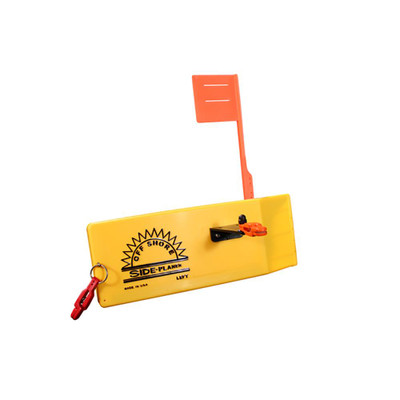
- Inline planer boards (1 pair minimum) — Shop planer boards →
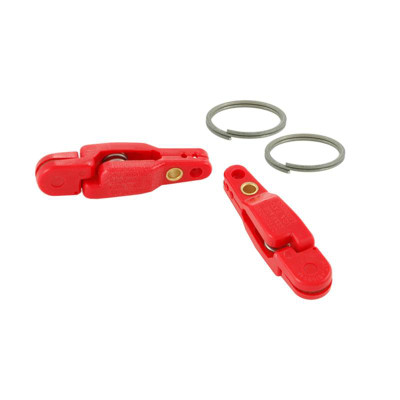
- Snap releases (extras too — they wear out fast) — Shop releases →
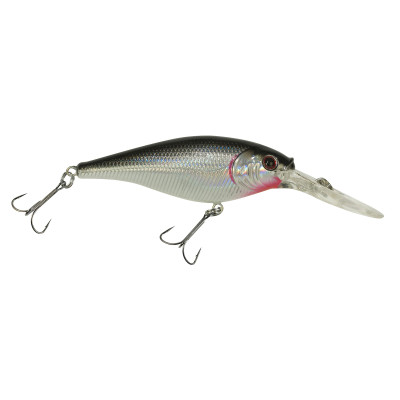
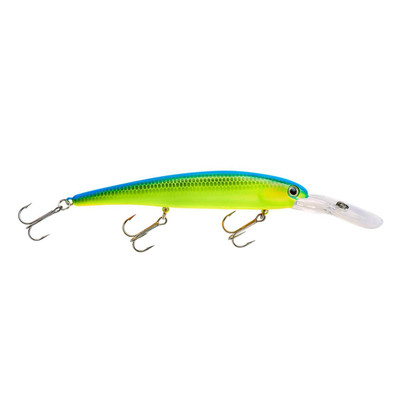
- Walleye crankbaits — natural + firetiger/contrast, 3 diving depths — Shop walleye crankbaits →
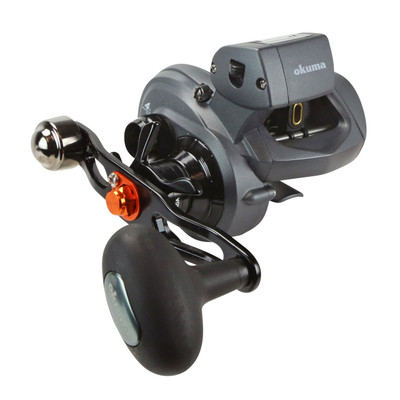
- Trolling rods + linecounter reels — Shop trolling rods + reels →
- Crankbait snaps + ball-bearing swivels — Shop snaps & swivels →
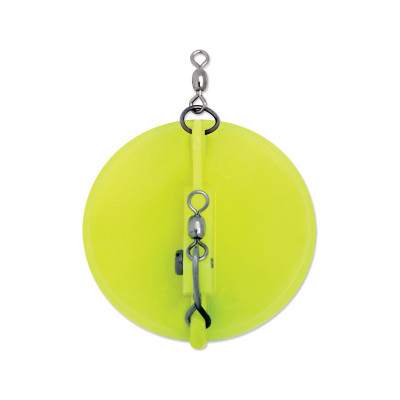
- Divers (once you’re ready for depth) — Shop divers →
Shop the Trolling Essentials
Read Next
FAQ
Neither is universally better — both excel in specific conditions. Jigging wins when fish are concentrated on breaks, structure, or seams and you can control your drift. Trolling wins when fish are scattered, wind is too high for jig control, or you need to cover water to find fish. Most successful Erie anglers use a hybrid approach: troll to locate, jig to convert.
A sustained wind above 15 mph starts making jig control difficult in 15–20 feet of water. Above 20 mph, most anglers can’t maintain reliable bottom contact without going to heavy, unnatural-feeling heads. Transition to trolling when you’re losing consistent contact between lifts — typically when your jig is moving 5+ feet per drop due to wind push.
Try these in order: (1) Change cadence — add a longer 2–4 second pause on the bottom before lifting. (2) Go one jig size lighter to slow the fall and increase time in the strike zone. (3) Switch profile — ringworm after paddletail, or minnow body if fish seem finicky. (4) Check leader length — in clear water, extend to 24 inches. Color is the last thing to change. If none work after 20 minutes, consider pulling lines and trolling past to reset fish positions.
Troll parallel to the seam with boards on the boat’s cleaner side and baits running into the stained edge. Mark the seam with waypoints every 10–15 minutes and run consistent passes along it. Test the clean side first, then the stained side — most days the best bite is in the first 10–20 feet of stained water. Make gradual seam-crossing passes with wide turns to avoid board tangles. See the water color playbook for the full breakdown.
Add divers once your board spread is running cleanly and you need to reach fish deeper than standard leads on mono can reach — typically when walleye are at 25–35+ feet. Master the board spread first. Divers require adjusted turning technique and add complexity to the spread. Full divers guide →
Change speed first — adjust 0.2 mph up or down and make a full pass before evaluating. If no improvement, adjust lead length by 25 feet. Next, change bait profile (action, diving depth). Color is last. Most trolling problems are a speed or depth issue, not a color issue. Resist the urge to pull boards and swap colors — that resets your clock and rarely solves the root cause.
Change weight or cadence first — not color. If you’re in the right zone with fish on sonar but not biting, go one size lighter and add a longer pause. Then switch profile (paddletail to ringworm, or vice versa). Check your leader length. Color is the last variable to change on Erie. If bites stop completely with no marks, the fish have moved — work along the edge or structure rather than sitting still.
Yes — and on most Erie days, the hybrid approach produces more fish than committing to one method all day. The typical plan: troll for the first 45–60 minutes to find where fish are holding, then pull boards and jig the spot once you’ve located concentration. Repeat the cycle as fish move. Having both setups ready before launching makes the transition quick.
Start with the mud line if one exists — walleye concentrate along clarity transitions reliably. If the lake is uniform, target known structure (reefs, gravel-to-mud transitions, rock piles) and troll across them until you find active fish on sonar. Check water temperature: if surface temps are still in the 40s–50s, pre-spawn fish stack on the shallowest reachable structure. Track wind history — a 12–24 hour blow pushes bait and walleye to predictable locations.
In early spring (water temps 40–50°F), western basin fish often hold in 8–18 feet on or near hard bottom — reef tops, gravel patches, nearshore rubble. As water warms through 50–58°F, fish begin moving off structure and suspending. By 60°F+, they scatter more broadly. Jigging is most efficient in that first cold-water window when fish are pinned to structure. Once they suspend and scatter, trolling becomes the more effective search tool.