
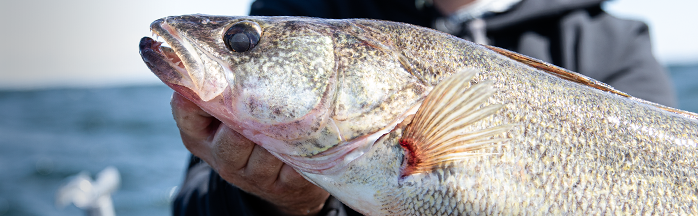
Quick Start
If you read nothing else, read this
- Fish scatter after the spawn: females drop to deep recovery zones (15–25 ft), males linger shallower (8–14 ft) near spawning areas. Cover both depth zones before giving up on a spot.
- Switch to cranks at 52–54°F: once temps are consistently above 52°F and fish begin showing mid-column on sonar, crankbaits cover water faster than jigs can.
- Search first, commit second: run cranks parallel to structure to find active fish, then slow down and work the concentration with jigs or slower cranks.
- Deflections matter: a crankbait bouncing off a rock, log, or bottom transition triggers more bites than a clean straight retrieve — let the bait work the structure.
Where Fish Go After the Spawn
Understanding post-spawn movement is the foundation of the search plan. The fish don't disappear — they relocate according to a predictable sequence tied to water temperature and recovery stage.
Days 1–7 post-spawn · 48–53°F
Recovery Phase
Females drop to the first major depth adjacent to spawning gravel — typically 15–25 feet on a hard bottom break. They're lethargic, rarely rise off bottom, and reject most presentations. Males are more catchable: they linger shallower (8–14 ft) near spawning areas and remain reactive to moving baits.
- Target males: cast parallel to spawning flat edges at 8–14 ft
- Best presentation: slow floating minnow or shad crank ticking bottom
- Females: mostly untargetable — jigs with extended pauses work, cranks rarely
Days 7–14 post-spawn · 53–58°F
Transition Phase
Females begin moving from deep recovery zones onto main-lake structure — first breaks, main-lake points, and mud-sand or rock-mud transitions. This is when they become catchable again. Both sexes are on the move and responding to covering presentations.
- Target: upper face of first main-lake break (12–18 ft)
- Best presentation: shad crank or slow trolling crank parallel to break
- Key signal: fish showing mid-column on sonar, not just bottom arcs
14+ days post-spawn · 58–62°F
Active Feeding Phase
Full active feeding resumes. Fish are on main-lake structure following emerging shad and perch schools. This is the best crankbait fishing of the year — fish are aggressive, spread across a variety of depths, and will chase baits moving at normal or fast retrieves.
- Target: main-lake points, humps, and weed line edges (10–20 ft)
- Best presentation: shad crank, trolling diver, or minnow at normal retrieve speed
- Key signal: aggressive follows, multiple fish per spot, suspended fish on structure
Cold fronts reset the clock
A cold front dropping temps 4–6°F post-spawn can push recovering females back to deep structure and shut males down for 24–48 hours. When this happens, go back to slow jigging on the base of the break until temps stabilize. Don't force cranks on post-frontal fish — slow down and wait for the recovery window to reopen.
Why Cranks Beat Jigging for Post-Spawn Search
Jigging is a precision tool — it works a defined zone and excels on concentrated fish. Post-spawn fish aren't concentrated yet. Cranks solve that problem.
Crankbait Types for Post-Spawn
Three types cover the post-spawn depth and situation range. Know what each one does and you'll know which to reach for at each phase of the search.
4–10 ft · Shallow flats + emerging edges
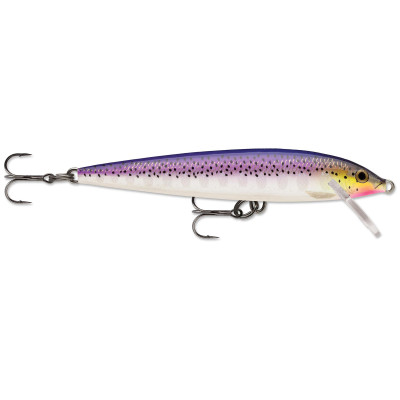
Floating Minnow
A long, thin body with a subtle wobble on the retrieve and a glide-and-suspend or rise on the pause. Best for shallow post-spawn fish still near spawning areas and for targeting males on emerging weed edges and flat transitions.
- Action: cast and twitch, or slow straight retrieve barely ticking bottom
- Best when: fish are shallow (4–10 ft), temps 50–56°F, calm to light wind
- Key retrieve: cast past target, twitch twice, pause 2–3 seconds, repeat
8–15 ft · Main breaks + points
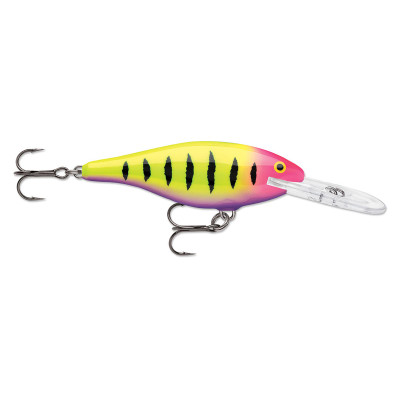
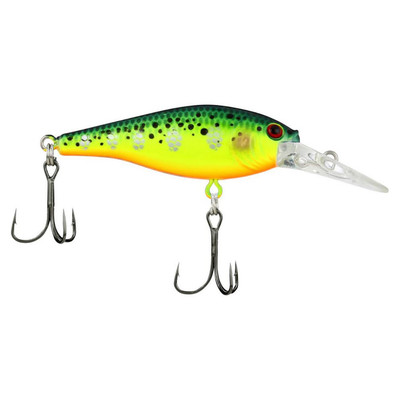
Shad-Style Crank
A shorter, deeper-bodied bait with a tighter wobble that produces strong vibration and flash. The workhorse for casting parallel to main-lake breaks and points in the 8–15 foot range. Deflects well off rock and hard bottom.
- Action: steady retrieve that occasionally contacts bottom; pause at depth changes
- Best when: fish are on main-lake structure (8–15 ft), temps 53–60°F
- Key retrieve: cast up-current or up-wind and retrieve into it; let deflections happen naturally
12–25 ft · Long structure runs + deep transitions
Trolling Diver
A larger, deep-diving crankbait designed to be trolled along structure at consistent depth. Covers long breaks, extended points, and mud-rock transitions efficiently. Best for the active feeding phase when fish are spread across main-lake structure at 12–25 feet.
- Action: trolled at 1.8–2.5 mph; turn the boat to vary depth and cause erratic action
- Best when: fish are deep (15–25 ft), active feeding phase, or searching a large area quickly
- Key retrieve: troll parallel to the break, not over it; keep the crank ticking the upper face of the structure
The Search Plan
Post-spawn fishing requires a systematic approach. Work through this sequence at each major location before moving on — fish may be in any of these zones depending on how far post-spawn they are.
Use your sonar to validate, not to find
Post-spawn fish on sonar don't always mean active fish. Flat arcs tight to the bottom are likely recovering. Fish showing mid-column or reacting to your trolling pass are catchable. Run your first crank pass to get a reaction before committing to a spot based on marks alone — the crank confirms whether fish are active faster than interpreting sonar arcs.
Depth and Speed Reference
Use this as a starting-point reference before dialing in on the water. Adjust retrieve speed based on fish response — follows without bites mean speed up; no follows at all mean slow down or change depth.
| Crank Type | Target Depth | Retrieve / Troll Speed | Best Scenario |
|---|---|---|---|
| Floating minnow (F-7 size) | 4–10 ft | Twitch-pause, 1.5–2 mph | Shallow males, 50–56°F |
| Shad crank (SR-5 size) | 8–14 ft | Steady, 2–2.5 mph equivalent | Main breaks, transition phase |
| Shad crank (SR-7 / larger) | 10–16 ft | Steady to moderate, 2–2.5 mph | Active feeding phase, 56–62°F |
| Trolling diver (shallow) | 12–18 ft | 1.8–2.2 mph | Transition to active phase |
| Trolling diver (deep) | 18–25 ft | 1.8–2.5 mph | Recovering females, deep structure |
| Post-front (any type) | Match depth of marks | Slow to 1.5 mph or switch to jig | Neutral fish after cold front |
Speed-up to trigger, slow down to convert
If you're getting follows or taps but not solid hookups, try bumping speed for 3–4 casts to trigger a reaction bite. If that doesn't work, slow down and let the crank tick bottom more aggressively on pauses. The fish that follow but won't commit are transitional — sometimes the deflection off a hard bottom kicks the bait into them and forces the strike.
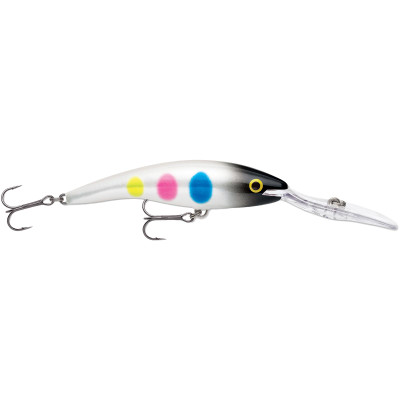
Crankbait Starter Set
These four cranks cover the full post-spawn depth range — shallow minnow for flat edges, shad cranks for main breaks, and a deep diver for long structure trolling passes.
Post-Spawn Crankbait Starter Set
Shallow minnow + shad cranks + trolling diver — 4–25 ft covered
When to Stay on Jigs
Cranks are the right search tool, but jigs still win in specific situations. Know when to switch back.
Common Mistakes
Post-spawn is one of the most misread periods of the year. These are the mistakes that cost fish during the transition window.
Read Next
FAQ
Females take 7–14 days to recover depending on conditions. Males recover faster and stay more active near spawning areas. Once water temps push into the 54–58°F range and hold for a few days, both sexes begin feeding aggressively. Fish showing mid-column on sonar (not just flat bottom arcs) is the clearest on-water signal that the active window has opened.
Post-spawn walleyes are scattered — they've moved off the spawning gravel and spread across adjacent structure. Jigging works on specific fish in specific spots; crankbaits let you cover water efficiently to locate concentrations before committing to a presentation. Cranks also match emerging spring forage (shad fry, shiners) better than soft plastics once those baitfish begin schooling in the shallows.
Females drop to the first significant depth adjacent to spawning areas — typically 15–25 feet on the nearest hard bottom break. Males linger shallower (8–14 ft) on the edges of spawning flats and are more catchable. Both sexes eventually push to main-lake structure — points, breaks, and mud-rock transitions — as temperatures rise and forage begins to concentrate.
Start shallow — 8–14 feet — on structure adjacent to spawning areas. Males are often here and more catchable early in the post-spawn window. As temps push above 54°F, fish move to main-lake structure at 12–20 feet. Run crankbaits that contact the upper face of the break — fish are relating to the transition, not sitting on the flat.
Slower than most anglers expect. For casting: a retrieve that keeps the crank ticking bottom with occasional pauses at depth changes. For trolling: 1.8–2.2 mph to start, then bump to 2.5 mph if you're getting follows but not commits. Speed up to trigger reaction bites from aggressive fish; slow down after cold fronts. Deflections off rocks and hard bottom matter more than exact speed.
A shad-style crank (Rapala Shad Rap SR-5, Berkley Flicker Shad) running 8–14 feet is the most versatile post-spawn option. For shallower fish near spawning areas, a floating minnow (Rapala Original F-7) with a twitch-and-pause retrieve covers 4–10 feet. For covering deep structure (15–25 ft) or long break runs efficiently, a trolling diver like the Rapala Deep Tail Dancer finds fish that casting can't reach.
Active fish show mid-column on sonar near structure, often rising off bottom when a bait passes. They'll follow and strike crankbaits at normal retrieve speed. Recovering fish sit tight to bottom, rarely rise, and show as flat arcs over gravel. If you're marking fish but they won't commit to a crank, slow to a jig or switch to a slow-moving minnow bait with extended pauses — recovering fish sometimes take a bait that's nearly stationary.
Stay on jigs when: water temps are still below 52°F, a cold front just passed and fish have reverted to neutral, you've located a specific school and want to work it precisely, or you're fishing tight snaggy structure where cranks would hang constantly. Jigs are also better when fish are lying flat on the bottom in deep water (20+ ft) and won't rise to intercept a running crank.