
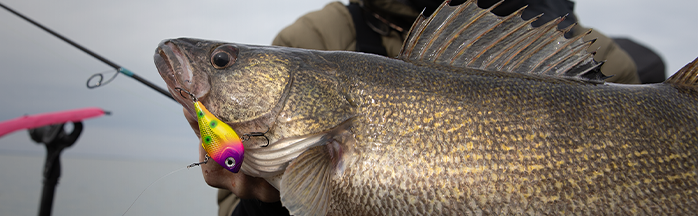
Spring Walleye Fishing: The Playbook
(Pre-Spawn → Spawn → Post-Spawn)
Spring walleye success comes down to three variables: water temperature, wind-driven drift speed, and bottom contact. This hub routes you to the exact setup, jig weight chart, cadence rules, color logic, and post-spawn search plan so you’re making the right adjustment at every stage — not guessing.
Last updated: April 2026 · By: FishUSA Staff
Start Here (Pick Your Conditions)
Quick decision rules
- If the water is 36–45°F: start with a jig, minnow profile, and slow drag cadence. Don’t overthink it. → Temp triggers guide
- If it’s windy or you’re in current: go heavier until you feel bottom on the fall. Weight before color, every time. → Jig weight chart
- If it’s clear and fish are scattered: add a suspending jerkbait above 46°F to cover water and trigger followers. → Jerkbait hub
- If you’re post-spawn (above 52°F): fish have scattered — start covering water with cranks before dialing in. → Post-spawn search plan
Most-used links
- Complete Spring Walleye Jigging Setup — the full system, built out
- Pre-spawn staging map — breaks, points, and current seams
- Cold-water cadence rules — drag vs. snap vs. glide
Spring Phases (What Changes and When)
Spring walleye fishing isn’t one season — it’s three distinct windows, each requiring a different location logic and presentation approach. Know which phase you’re in before you make the first cast.
Pre-Spawn (Staging)
Fish move from deep basin structure to staging areas near spawning routes. They concentrate on inside bends, first breaks off gravel, and current seams. Feeding windows are short but predictable. Bottom contact and slow cadence are everything here.
- Where: First breaks off gravel and rock, inside turns, current seams adjacent to spawning routes, points with access to depth
- Start with: 1/16–1/8 oz jig + minnow profile; slow drag cadence; go lighter in calm water
- Temp range: 38–47°F
- Best next read: Pre-spawn staging map
Spawn Window
Fish are on or near gravel and rock. Bites can be short and finicky. Check your state regulations — some waters are restricted during the spawn. Where legal, focus on staging edges adjacent to spawning areas, not directly on the beds.
- Where: Rock/gravel with current access, shallow flats adjacent to depth, staging edges at 8–18 ft
- Start with: Subtle minnow profile + longer pauses between lifts; avoid fast retrieves
- Temp range: 45–52°F (peak spawn 47–49°F)
- Best next read: Cold-water cadence rules
Post-Spawn Transition
Fish scatter after the spawn. Females drop to deep adjacent water to recover; males roam staging areas. Covering water becomes more important than perfect presentation — find them first, then dial in.
- Where: First breaks off spawning areas, structure edges, points, and bait-holding flats at 12–25 ft
- Start with: Crankbait or jerkbait to cover water and locate; jig to work them once found
- Temp range: 52–62°F
- Best next read: Post-spawn search plan
Where to Start (High-Percentage Spring Spots)
- Breaklines near spawning routes: The first drop-off off gravel or rock — inside turns and points. Fish stage here pre- and post-spawn, using these transitions to move between deep water and the shallows.
- Wind-facing points: Sustained wind (12+ hours) concentrates bait on the windward side. Walleye follow. Current-swept points with access to depth are the highest-percentage stops in spring.
- Current seams: Where fast and slow water meet. Fish hold in the soft water and ambush bait swept through the seam. A slow, drifted jig through the seam edge is extremely effective early season.
- Bottom transitions: Rock-to-mud or gravel-to-sand edges define feeding zones and preferred bottom contact. Start here before working open flats.
Use the map: Pre-spawn staging map (breaks / points / seams) — exact structure types with notes on how to work each one.
What to Throw (Simple Spring Rotation)
- Start: Jig + minnow profile (or subtle paddletail). Keep it on the bottom. If you can’t feel it tick on the fall, go heavier before changing anything else.
- Adjust weight first: As wind picks up or current changes, resize the jig before touching color or profile. Use the jig weight chart — it covers every depth and wind combination.
- Then adjust cadence: A slower drag, longer pause, or a single short snap often triggers fish that ignored a standard lift-drop. Cadence rules break down exactly when to use each approach.
- Add a jerkbait to search: In clear water above 46°F, a suspending jerkbait on a 3–5 second pause can outproduce a jig when fish are scattered or following without committing. → Jerkbait hub
- Cover water post-spawn: Once fish scatter above 52°F, switch to crankbaits to locate them efficiently. Find them first, then slow back down. → Post-spawn search plan
Color rule (simplified)
Natural profiles (shad, smoke, pearl) in clear water. High-contrast colors (chartreuse, white, orange) in stained or off-color water. Below 44°F with any stain, chartreuse/white is almost always the right starting point. → Full spring color rules guide
Setup Guides
Each guide covers the full gear list for that technique — what to buy, what weights and sizes to start with, and how to use it. Start with the jigging setup if you’re new to spring walleye. Add the jerkbait setup once you’re fishing water above 46°F.
Walleye Jigging Hub
The complete jigging system — vertical vs casting, jig weight by depth and wind, cadence by temp, and the three plastic profiles that cover every fish mood. Start here, then use the setup guide for the full gear list.
Go to Jigging Hub →Cold-Water Jerkbait Hub
Cadence by temperature, color rules by clarity, and the gear setup that works from ice-out through 55°F. Use this when fish are willing to rise — jerkbaits are the most efficient cold-water search tool.
Go to Jerkbait Hub →Jig Weight Chart by Depth + Wind
Match jig weight to depth, drift speed, and wind before you buy. The most-referenced spring decision — use this before adding anything to your cart.
Open weight chart →Supporting Guides (Use These as Your “Adjustments”)
This hub gives you the framework. Each guide below is the deep-dive on one specific adjustment — bookmark the ones that match where you’re fishing.
- Walleye Jigging Hub (vertical + casting) — jig weight by depth and wind, cadence rules, plastic profiles, and the complete line system for spring jigging.
- Cold-Water Jerkbait Hub — cadence by temperature, color rules by clarity, and the gear setup that works from ice-out through 55°F.
- Water temp triggers (36–60°F) — where fish are and what they want at every 5-degree band from ice-out to post-spawn.
- Pre-spawn staging map — the exact structure types to look for: breaks, inside turns, points, and current seams, with notes on how to work each.
- Jig weight chart by depth + wind — quick-reference table so you’re always in contact regardless of conditions.
- Cold-water jig cadence rules — drag vs. snap vs. glide: when each retrieve outperforms the others and the exact triggers that tell you to switch.
- Spring color rules (clear vs. stained) — the decision framework for water clarity, light level, and temperature that applies to both plastics and hard baits.
- Post-spawn search plan — where fish go after the spawn and the step-by-step approach to finding and catching them as they scatter.
Read Next
Dig deeper on spring walleye technique, gear, and location with these supporting guides.
FAQ
Common questions about spring walleye fishing — temp triggers, setup, and technique.