
Quick Start
Five rules before you rig up
- Start with the lightest weight that keeps you ticking bottom on a semi-taut line — not dragging, not swinging free.
- Wind and current increase weight requirements first — before you change color, profile, or retrieve speed.
- If you can't tell bottom from weeds or rock, adjust weight and reduce line angle until you can. Sensitivity comes from contact, not patience.
- One step at a time: go up 1/16–1/8 oz at a time. Jumping from 1/8 to 1/2 oz skips information about what fish are willing to chase.
- Drift speed matters more than depth. A fast 1.5 mph drift in 12 ft can need the same weight as a calm day in 22 ft.
Jig Weight Chart by Depth + Wind
Find your depth row, then move across to your wind or drift speed column. These are starting-point ranges — always test one step lighter first and step up until you have consistent contact. In moving water or strong current, treat it as one column to the right (heavier).
| Depth | Calm / Light Drift < 0.5 mph |
Moderate Wind / Drift 0.5–1.5 mph |
Windy / Fast Drift or Current 1.5+ mph |
Notes |
|---|---|---|---|---|
| 6–10 ft | 1/16–1/8 oz | 1/8–3/16 oz | 1/4–3/8 oz | Don't over-weight the shallows — a heavy jig hits bottom instantly with no fall time. Stay light; slow fall = more time in the zone. Keep rod angle high to feel through grass and soft bottom. |
| 10–15 ft | 1/8–1/4 oz | 1/4–3/8 oz | 3/8–1/2 oz | Standard spring depth. 1/4 oz is the workhorse in calm to moderate conditions. Step to 3/8 when drift overtakes your line angle. Most common range for Great Lakes walleye fishing. |
| 15–25 ft | 1/4–3/8 oz | 3/8–1/2 oz | 1/2–3/4 oz | Step heavier the moment you lose consistent feel. At 20+ ft in moderate wind, 3/8 is a minimum. Watch your line for slight jumps or slack-line bites — strikes are subtler at this depth. |
| 25–35 ft | 3/8–1/2 oz | 1/2–3/4 oz | 3/4–1 oz | Line angle is the primary challenge here. Stay as vertical as possible — even a small drift at 30 ft dramatically reduces effective weight. If you're over 45° off vertical, go heavier or slow the drift. |
| 35–50+ ft | 1/2–3/4 oz | 3/4–1 oz | 1–1.5 oz | Control is the only priority. Keep the rod pointed at the water, use 10–15 lb braid for max sensitivity, and slow the drift. If you consistently need more than 1 oz, consider a drift sock or slip-sinker rig. |
Current = one column to the right
If you're in moving water — rivers, current seams, or wind-driven drift faster than 1.5 mph — bump up one full column. Current affects your line far more than still-water wind at the same speed. In rivers, treat 0.5–1.5 mph current as "windy" regardless of actual wind.
Walleye Jig Heads — Multi-Weight Assortment
1/16–1 oz options to match every depth and drift speed in the chart above


How to Use This Chart
Four steps from reading conditions to having the right weight tied on.
- Estimate your depth and drift speed. Read depth from your sonar. For drift speed, watch how fast you're moving relative to a fixed point on shore, or check your GPS. "Calm" is barely drifting; "moderate" is a noticeable drift you wouldn't anchor against; "windy/fast" is when you'd normally reach for a drift sock.
- Pick the lightest weight in the range. The chart gives ranges for a reason — start light. A 1/8 oz start in the 10–15 ft calm column will tell you whether you need the 1/4 oz before you've wasted time committing to the heavier head.
- Test for bottom contact. Drop to the bottom and hop the jig twice. If you feel a distinct tick when it lands — and you can differentiate rock from soft mud from weeds — your weight is in the right zone. The jig should load the rod tip on the drop and release cleanly on the hop.
- Adjust one step at a time. If you're dragging (jig grinds continuously, no pause), go one step lighter. If you're losing feel or your line is bowing, go one step heavier. Don't jump multiple weights at once — each step is diagnostic.
What "good bottom contact" feels like
- Tick — pause — tick: You feel the jig land, sit briefly on bottom, and load the rod tip. Not a grind, not a constant tug — a distinct tap at the end of each fall.
- Structure differentiation: With the right weight, you can tell rock (sharp click) from mud (soft thud) from weeds (grabby, slow release). If everything feels identical, your weight or line angle is off.
- Bites feel like extra heaviness on the fall: In cold water, walleye bites often feel like the jig stopped falling slightly early or got heavy mid-drop. Only detectable with correct weight and a near-vertical line angle.
Rules of Thumb
Quick-reference principles that apply across every depth and wind condition.
- Go heavier before changing color. The most common mistake is switching plastic color when the real problem is too-light weight killing sensitivity. Dial in contact first, then adjust presentation.
- Angle matters as much as weight. A 1/4 oz fished nearly vertical in 15 ft outperforms a 3/8 oz at a 45° angle. Slow the drift and fish more vertically before stepping up in weight.
- If you're catching weeds constantly, go lighter one step and raise your rod angle slightly. More weight doesn't help if it's already dragging through structure. A slower fall clears more weeds than heavier weight does.
- Fishing a current seam? Treat the fastest part of the current as your condition — not an average. Erring lighter in a seam results in your jig swinging through the zone rather than staying in it.
- When in doubt, start at 1/4 oz. It's the pivot weight for spring walleye in 10–20 ft of water. If you only bring one weight to a new spot, 1/4 oz is it — adjust from there based on conditions.
- Tungsten over lead at the same weight. Tungsten is denser — a 1/4 oz tungsten head is physically smaller and transmits more feel. Most noticeable at lighter weights (1/8 oz and below) where sensitivity is hardest to maintain.
- Don't chase contact at the expense of the bite. If fish are short-striking after you've stepped heavier, try a slower drift with a lighter jig — sometimes a slightly slower fall is worth the occasional missed contact.
Snaps vs Tie (Quick Changes)
On a day when you're running through multiple depths and wind conditions — which is most spring walleye days — the snap vs. tie-direct question matters more than most anglers think.
- Use a snap when changing weights frequently. Cut the old jig, clip the new one, and keep fishing. Over a full day of adjusting weight 6–10 times, that time adds up to a lot of extra casts. A properly sized snap does not meaningfully change a walleye jig's action.
- Tie direct with very light jigs. At 1/16 oz or smaller, even a size-10 snap represents a significant percentage of total weight and can affect the balance point of the jig. Direct Palomar into the jig eye is cleaner at these weights.
- Tie direct in ultra-clear, high-pressure water. When walleye are inspecting everything closely, a direct connection is the most natural presentation. The tradeoff is slower weight changes — worth it when you're confident in depth and weight.
Recommended approach
- Snap size: Size 10–12 (or equivalent smallest that opens with cold fingers). It should not visibly torque or compress the jig eye — if it does, go smaller.
- Two-rod strategy: Carry one rod rigged light (1/8 oz) and one medium (1/4–3/8 oz). Switching rods is faster than retying and covers both ends of your likely weight range without fumbling with snaps in cold weather.
- Check your snap after each fish. A bent or opened snap is a lost jig — and lost jigs are usually the ones with the fish-catching bait on them.
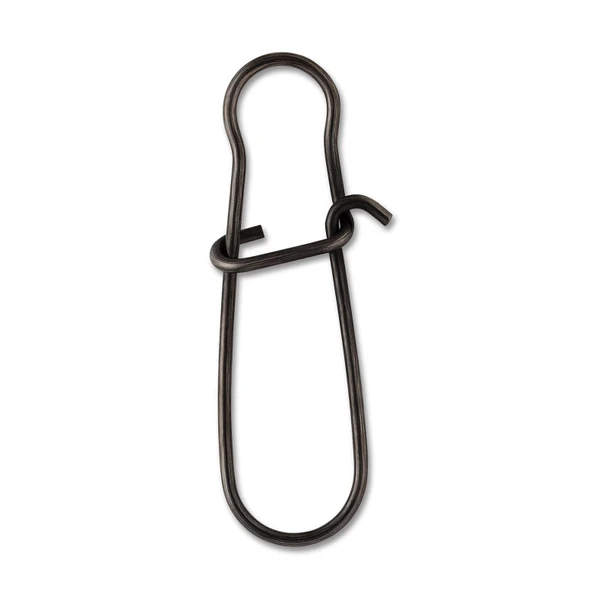
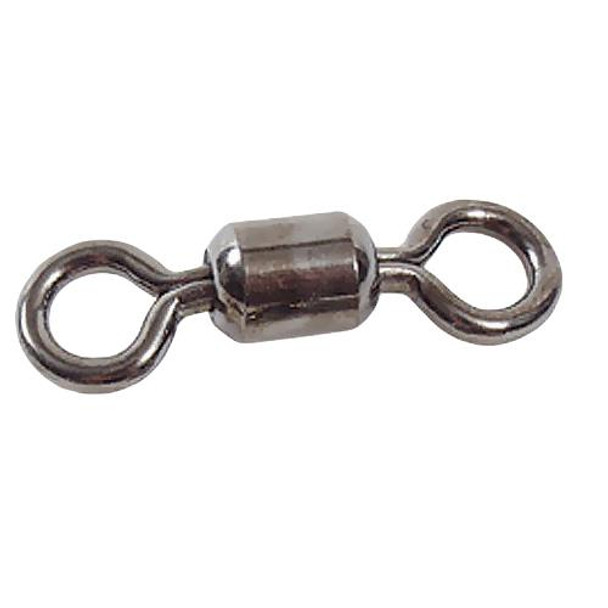
Snaps & Quick-Change Terminal Tackle
Duo-lock snaps and split rings for fast jig swaps without retying


Troubleshooting
The three most common weight-related problems and how to fix each one.
Problem
I can't feel the bottom
- Go heavier one step — almost always the first fix.
- Slow the drift — even dropping from 1.5 to 1 mph can restore contact without changing weight.
- Get more vertical — shorten the line out, fish directly below or just behind the boat.
- Check for line bow — point the rod tip low toward the line, not up in the air.
- Try tungsten — at the same oz rating, tungsten gives better feel and a faster fall than lead.
Problem
I'm snagging too much
- Go lighter one step — more weight wedges into rock crevices easier.
- Raise your rod angle — more line between you and the jig cushions the impact on structure.
- Switch to hop-pause — dragging continuously gets it stuck; lift-and-drop keeps it moving over structure.
- Check jig head style — stand-up heads have a lower snag profile on flat hard-bottom than round heads.
Problem
Bites feel like "nothing"
- Keep contact on the fall — most spring bites happen on the drop. Semi-taut line, not tight, not slack.
- Pause longer — cold walleye pick up a motionless jig more than a moving one.
- Subtler profile first — switch from paddletail to minnow or ringworm before changing color.
- Slow your hookset — let the rod load, then sweep low. Cold fish hold loosely.
Problem
Line bow I can't fix
- Go heavier first — more weight cuts through bow before any other fix.
- Shorten cast dramatically — fish directly below or at most 10 ft back.
- Point rod tip at the water — rod high = more exposed line = more bow.
- Add a drift sock — slowing drift 50% can eliminate bow without touching the weight at all.
Want the full system?
This chart covers weight selection. For jig heads, plastics, line, leader, terminal, and kit recommendations, go to the complete guide: Build the Spring Jigging Setup →