
Quick Start: Lead Length at a Glance
If you’re in a hurry, these bullets cover the essentials. The full depth is below.
- Lead length controls three things simultaneously: how deep the bait runs, how natural the action looks, and how far the bait is from boat noise
- Longer lead (more line out) = deeper running on standard mono, more natural pull angle, more stealth — but less control on turns
- Shorter lead = shallower, more direct action, tighter spread control — best in wind, heavy chop, or tight structure
- Start at 50 ft as your baseline. Record it on a linecounter. Adjust from there one variable at a time
- Three working zones: Short (25–45 ft), Medium (50–75 ft), Long (80–120 ft)
- With boards: stagger leads so inside rods run shorter, outside rods run longer — at least 20 ft of separation per rod
- If you’re snagging bottom: speed up first, then shorten lead, then swap bait
- If you’re not reaching depth: slow down first, then lengthen lead, then switch to divers
- Change the adjustment ladder in order: speed → lead length → bait → color. Never change two variables at once
- A lead that produced a bite is useless without a linecounter reel — you can’t repeat it by feel
- Clear or pressured water: add 20–40 ft to your normal lead to put the bait away from the boat wake and shadow
- Copying another angler’s exact lead only works if you match their speed and line diameter
If you only do one thing
Set a baseline lead of 50 feet on every rod, note the depth each bait reaches at your current speed, and write it down. When you get a bite on that lead, duplicate it exactly. Every other adjustment in this article builds from that baseline.
What Lead Length Actually Changes
Most anglers think of lead length as purely a depth lever. It’s more than that — four things change every time you let out or reel in line.
1. Running Depth
With standard monofilament or fluorocarbon, letting out more line creates more belly (sag) in the line between the rod tip and the bait. That extra belly allows the crankbait’s diving lip to angle more aggressively downward and drive deeper. At 50 ft, a bait might run 12 feet down; at 100 ft, the same bait at the same speed might reach 16–18 feet. The relationship is not perfectly linear — most depth gains happen in the first 75–100 ft of lead, with diminishing returns beyond that.
Line diameter and composition change this relationship significantly. Thinner line (low-diameter fluorocarbon or braid) has less water resistance, creates less belly, and allows baits to dive deeper at any given lead. A 75-ft lead on 8 lb fluorocarbon will run noticeably deeper than the same lead on 17 lb mono.
2. Lure Action and Pull Angle
At short leads, the line angle from rod tip to lure is relatively steep — the bait is being pulled almost directly up from below. This shortens the bait’s action and can make it run erratically. At longer leads, the pull angle flattens out, giving the bait more room to work naturally through its designed wobble. Most crankbaits are designed with a relatively flat pull angle in mind — which is one reason 50+ ft leads tend to produce better action than 20 ft leads at the same speed.
3. Stealth and Boat Noise
Walleye — especially in clear water or on pressured fisheries — spook from boat noise, motor vibration, and the shadow passing overhead. A bait running 30 ft back is in the middle of that disturbance zone. A bait running 90 ft back is in undisturbed water the fish haven’t been alerted to yet. This stealth advantage is often the difference between consistent bites and followers that won’t commit.
4. Repeatability
None of the above matters if you can’t reproduce a productive lead. When a specific lead length produces a bite, you need to set every other rod to that same lead immediately. That requires a linecounter reel. Without one, you’re estimating — and a 10-foot error in lead can move a bait completely out of the strike zone at the depth you were targeting.
Linecounters are not optional
A productive lead is the single most valuable data point you can collect in a trolling spread. A linecounter makes that data usable. It’s the highest-return upgrade in any trolling setup. Add them before you add more rods.
Starter Rules (Memorable and Practical)
These rules work across most walleye trolling situations. Learn the logic behind them so you can adapt when conditions change.
Clear Water or Pressured Fish → Longer Leads
If you can see the bottom in 6 feet, fish can see your boat. Extend leads to 80–120 ft to put the bait in undisturbed water. Boat avoidance behavior is one of the most underrated factors in slow trolling bites on clear or heavily fished water.
Wind, Chop, or Tight Turns → Shorter Leads
Long leads are hard to manage in rough conditions. The extra line belly increases tangle risk on turns and reduces your ability to control bait position in wind-driven chop. In wind over 15 mph, shorten all leads by 20–30 ft from your normal setting and increase release tension to compensate for the choppier surface.
If You’re Hitting Bottom Too Much
Adjust in this order:
- Speed up 0.2–0.3 mph first. This is the fastest way to raise a bait — no lines to reel in, immediate effect. Make a full pass and evaluate before touching lead.
- Shorten lead by 25 ft. Less belly = bait runs higher. Straightforward, just costs time to reel in.
- Switch to a shallower-diving bait. If speed and lead adjustments still leave you snagging, the bait is simply rated too deep for the target zone. Swap lip angle.
If You’re Not Reaching Depth
Adjust in this order:
- Slow down 0.2–0.3 mph first. Slower speed creates more belly, lets the bait dive deeper. Evaluate before changing lead.
- Lengthen lead by 25 ft. More line = more depth opportunity for deeper-diving baits. Note the new linecounter reading.
- Switch to a deeper-diving bait (larger lip, longer bill). If lead and speed adjustments can’t get you there, the bait isn’t rated for that depth window.
- Add divers. If all of the above still can’t reach your target depth, divers are the tool. See When to Add Divers →
The one-at-a-time rule
Change speed OR lead length — never both in the same pass. If you adjust both simultaneously, you lose the ability to know which variable fixed (or broke) the pattern. Two changes at once is how you spend an hour chasing your tail.
Lead by Depth / Situation (Practical Table)
Use this as a starting point. Every number here assumes standard monofilament at 1.8–2.0 mph GPS. Thinner line runs deeper; faster speed runs shallower.
| Situation / Goal | Lead Zone | Example Range | Why | First Change if Off |
|---|---|---|---|---|
| Shallow / snag-prone water | Short | 25–45 ft | Less belly keeps bait high; easier to react quickly | Speed up slightly |
| Mid-depth edge (10–18 ft) | Medium | 50–75 ft | Standard starting point; good action and depth balance | ±25 ft, then speed |
| Deeper edge, no divers (18–25 ft) | Long | 80–100 ft | More belly for depth; needs deeper-rated bait | Slow down first |
| Clear water / pressured fish | Long+ | 90–120 ft | Stealth — bait well away from boat wake and shadow | Extend further if follows but no bites |
| Stained water / heavy chop | Short–Medium | 30–60 ft | Control matters more than stealth; shorter = cleaner turns | Check bait contrast; use high-vis pattern |
| Board spread (inside rod) | Short–Medium | 40–60 ft | Shorter lead on inside boards reduces tangle on turns | Move outside rod longer first |
| Board spread (outside rod) | Long | 75–100 ft | Longer lead staggered from inside; prevents crossing on turns | Move inside rod shorter first |
Your first bite is your best data
When any rod fires, immediately note the lead (linecounter reading), the speed (GPS), and which rod position produced the bite. Duplicate that lead on at least one other rod before making any other changes. That’s how a one-fish pattern becomes a three-fish pattern.
Lead Length with Planer Boards
When boards are in the spread, lead length stops being just a depth tool — it becomes a tangle prevention system. Staggering leads across all board rods is the single most important discipline in a clean spread.
Why Staggered Leads Prevent Tangles
On a turn, the inside board (the one you’re turning toward) slows down, loses planing angle, and begins to drift toward the boat. The outside board speeds up and pulls farther away. If two rods are running the same lead length, their lines converge and cross at the same point during every turn. Staggered leads keep lines at different positions in the water column, so they never occupy the same space at the same time.
The Inside / Outside Rule
- Inside board rod: always shorter lead — 40–60 ft. The inside board slows on turns, and a shorter lead keeps the line angle tighter and reduces slack.
- Outside board rod: always longer lead — 75–100 ft. The longer lead stays outside the arc of the inside rod on turns.
- Three rods per side: each needs at least 20 ft of separation. Example: 40 ft / 65 ft / 90 ft. Never run two rods on the same side at the same lead.
Turns and Lead Length Interaction
The tighter your turn, the more lead length matters. A gradual, sweeping turn gives all boards time to adjust — a sharp U-turn at full trolling speed with long leads out is almost guaranteed to tangle. If you need to reverse direction, widen your arc to a full S-curve or bring inside boards in before executing the turn. The longer the lead, the wider the minimum safe turn radius.
Practical stagger example (4-rod spread)
Rod 1 — Inside Left: 50 ft · shallow-running bait
Rod 2 — Inside Right: 50 ft · mid-running bait
Rod 3 — Outside Left: 85 ft · deeper-running bait
Rod 4 — Outside Right: 85 ft · shallow bait (runs deeper on longer lead)
The 35-ft gap between inside and outside rods keeps lines from crossing on gradual turns. See the full setup guide: Planer Boards 101 →
Lead Length with Divers
Divers change the lead length equation because they add mechanically driven depth — you’re no longer relying on line belly to reach your target zone.
How Divers Reduce Lead Requirements
A standard crankbait on 100 ft of mono might reach 18–20 feet. A diver set at a medium setting on 50 ft of lead can reach 25–30 feet at the same speed, with more consistent depth hold across speed variations. The diver is doing the depth work, so you can run shorter, more manageable leads and still reach fish that standard board spreads can’t touch.
Lead Still Matters with Divers
Even with a diver, the lead between the diver and the bait (called the snubber or leader behind the diver) affects lure action. A longer diver-to-bait segment (typically 8–12 ft) gives the bait more natural action. A shorter segment creates a tighter, more reactive pull. Most anglers start at 8–10 ft between the diver and the bait and adjust based on fish response.
The Diver Upgrade Path
Divers are the natural next step after mastering a board spread. Add them when fish are consistently 25+ feet down and standard leads can’t reach. Board management skill transfers directly — the same stagger and turn rules apply, but diver lines must come in before boards on tight turns.
Master boards first
Divers add a new set of turn management rules to an already complex spread. Get a 4-rod board spread running cleanly for a full season before adding divers. The skill compounds — anglers who add divers before they can manage boards reliably end up tangled more than they’re fishing. When to Add Divers →
The Adjustment Ladder (What to Change and When)
The most expensive mistake in trolling is changing two variables at once. When the bite stops, you need to know what fixed it. Follow this order and change one thing at a time.
The 4-step adjustment ladder
- 1. Speed — adjust 0.2 mph up or down. Make a full pass. Speed affects everything (depth, action, bait performance) and is the fastest change to execute. Speed control guide →
- 2. Lead length — adjust ±25 ft. Note the new linecounter reading. This changes depth and stealth simultaneously.
- 3. Bait style / depth rating — swap the action profile (wide wobble vs. tight), or move to a deeper or shallower diving bait.
- 4. Color — last resort. Color is almost never the primary variable when bites stop. Work through 1–3 fully before swapping colors.
Scenario: No Bites at All
- Confirm you’re at the right depth on sonar. If marks are at 22 ft and your baits are running 12 ft, no other change will help.
- Adjust speed 0.2 mph up or down. Run a full pass.
- Lengthen or shorten lead by 25 ft to change depth zone. Note where the bait sits after the change.
- Switch bait profile if depth is confirmed but still no marks at the bait.
- Color last. Change one rod, compare against the other rods for 30–45 minutes before cycling more.
Scenario: Hitting Bottom Too Much
- Speed up 0.2–0.3 mph first — this is the fastest fix. You don’t have to touch your lines.
- Shorten lead by 25 ft on the snagging rod if speed alone isn’t enough.
- Swap to a shallower-diving bait as the last resort if the bottom transition requires it.
Scenario: Fish Marking High but Not Biting
- Fish are visible on sonar but suspended higher than your baits — you’re fishing below them.
- Shorten lead by 25 ft to raise the bait, or speed up slightly.
- Switch to a shallower-diving or suspending bait profile.
- In clear water, also extend lead for stealth — fish may be seeing the boat and avoiding the bait zone.
Give every change a fair trial
A lead length change needs at least one full pass — typically 20–30 minutes — before you evaluate it. Conditions and walleye feeding windows change, and a move that seems like it’s not working at 10 minutes may have been the right call at 20. Resist the urge to change a second variable before the first one gets a real trial.
5 Common Lead Length Mistakes
1. Changing Lead and Speed at the Same Time
This is the fastest way to destroy your data. If bites stop and you simultaneously reel in 30 feet of lead and bump speed 0.3 mph, you have no idea which variable produced the next bite (or why nothing happened). Change one at a time, evaluate, then change the next. It feels slower, but you finish the day with usable information instead of a pile of adjustments with unknown outcomes.
2. Not Staggering Leads on a Board Spread
Running two rods on the same side at identical leads is the most predictable way to tangle on every turn. Stagger is not optional — it’s the structural rule that makes the spread work. Inside shorter, outside longer, at least 20 ft between each rod on the same side. Every trip, every time.
3. Copying Another Angler’s Lead Without Matching Their Setup
If another boat says they’re getting fish at 75 ft, that’s useful information only if you match their speed and line. 75 ft of 10 lb mono at 1.8 mph runs completely differently than 75 ft of 8 lb fluorocarbon at 2.2 mph. Lead length is a relative number, not an absolute. Always ask what line and speed they’re running, or treat their number as a starting zone, not an exact setting.
4. Making Tight Turns with Long Leads Out
A sharp turn at trolling speed with 100-ft leads is a reliable tangle. Long leads need wide, gradual arcs. If you need to reverse course quickly, bring inside boards in first. Plan turns well in advance. The longer the lead, the more space you need to change direction cleanly.
5. Ignoring Line Diameter and Its Depth Effect
Many anglers switch from mono to thin-diameter fluorocarbon or braid and then wonder why their baits are suddenly running deeper or differently than expected. Thinner line has less water drag, creates less belly, and allows crankbaits to dive significantly deeper at the same lead and speed. Any time you change line type or weight class, re-baseline your lead lengths — what used to work at 75 ft may now require 55 ft to reach the same depth.
Troubleshooting (Fast Checklists)
Run through the relevant checklist. Each one references the adjustment ladder — work the steps in order before changing multiple things at once.
I Keep Snagging Bottom
- Speed up 0.2–0.3 mph (fastest fix, no lines to touch)
- Shorten lead by 25 ft on the snagging rod
- Check your bait’s rated depth range vs. the actual water depth — if the bait is rated deeper than the water, no lead adjustment will help
- Switch to a shallower-diving bait with a smaller lip if above steps don’t clear it
- Confirm speed on GPS — throttle feel often doesn’t match actual GPS speed, especially with current
I’m Not Reaching Target Depth
- Slow down 0.2–0.3 mph (more belly = more depth)
- Lengthen lead by 25 ft and note the new linecounter reading
- Check your line diameter — heavier mono is buoyant and limits depth; thinner fluoro or small-diameter braid dives deeper at the same lead
- Switch to a deeper-diving bait (longer bill, steeper lip angle)
- If target depth is 25+ ft: add divers (Divers guide →)
I Keep Tangling on Turns
- Check that inside rods are shorter than outside rods on every side — this is the most common cause
- Confirm at least 20 ft of separation between each rod on the same side
- Widen your turn arcs — make them gradual sweeps, not tight maneuvers
- Bring inside boards in before any tight turn
- Shorten all leads by 20 ft if tangling persists in chop (wave action adds line movement)
- Full board management guide: Planer Boards 101 →
No Bites
- Confirm fish are in the depth zone on sonar before adjusting anything — if there are no marks, no lead change will help
- Run the adjustment ladder: speed first (±0.2 mph) → lead length (±25 ft) → bait profile → color
- Change one variable per pass and give it 20–30 minutes
- Speed guide: Trolling Speed Control →
- If bites were happening before and stopped: check that boards are still planing cleanly and no line got fouled in a turn
Gear: What You Need to Run Lead Length Correctly
Lead length management requires the right tools. This isn’t about buying more — it’s about having the specific pieces that make lead adjustments usable.
Trolling essentials for lead management
- Linecounter reels — non-negotiable for repeatable leads. One per rod. Shop trolling rods + reels →
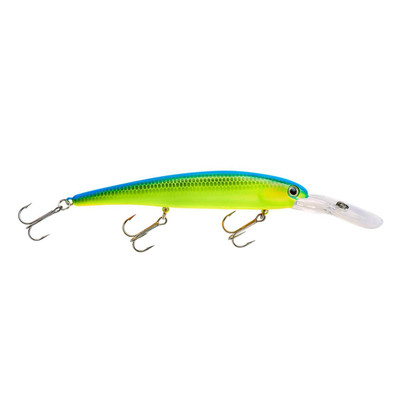
- Walleye crankbaits — at minimum, one shallow, one mid, one deep diver so you can cover all three depth zones. Shop walleye crankbaits →
- Crankbait snaps + ball-bearing swivels — fast bait swaps without retying; swivels prevent line twist on long trolling runs. Shop snaps & swivels →
- Standard monofilament (10–14 lb) — predictable depth performance and stretch cushion on treble hooks. Baseline line for most walleye trolling setups. Shop trolling line →
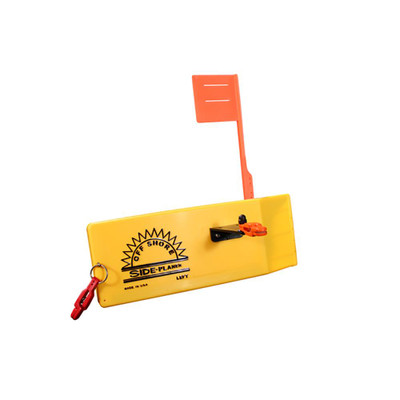
- Planer boards + releases — required for multi-rod spread management. Shop planer boards → — Shop releases →
Shop the Gear

Read Next
FAQ
50 feet is the standard starting point. From there, inside board rods run 40–60 ft and outside board rods run 75–100 ft to stagger the spread. In clear or pressured water, extend to 80–120 ft to put the bait well away from boat noise. The key is recording every lead on a linecounter so you can duplicate any lead that produces a bite.
Usually yes with standard mono — more line creates more belly, which allows the bait to dive deeper. But this is not linear, and the relationship changes with speed and line diameter. Faster speed reduces depth gain from longer leads. Thinner line dives deeper than heavier mono at the same lead. Check your bait’s published depth chart against your speed and line specs for specific targets.
Inside board rods always run shorter leads (40–60 ft), outside board rods always run longer leads (75–100 ft). Each additional rod on the same side needs at least 20 ft of separation. This stagger prevents lines from crossing on turns — when you turn, the inside board slows and the outside board speeds up, and without a stagger, same-length leads will cross.
Start every rod at 50 feet. Note what depth each bait reaches on sonar and write it down. When a bite happens, record the exact linecounter reading. From the 50-ft baseline, run one additional rod at 35 ft (short anchor) and one at 75 ft (long anchor) to compare all three zones simultaneously without changing speed.
Faster speed reduces depth at a given lead because the steeper line angle prevents as much belly from forming. Slower speed lets the line belly more and the bait runs deeper. This means speed is always the first variable to change — speeding up is faster than reeling in line to raise a bait, and slowing down is faster than letting out more line to go deeper. See the Trolling Speed Control guide for the full breakdown.
Add divers when walleye are consistently holding at 25–35+ feet and standard leads on mono can’t reliably reach them. Divers add mechanical depth regardless of speed variation, and let you run shorter, more manageable leads while still covering deep water. Master the board spread first — divers add turning complexity that’s easier to handle once you’re already comfortable managing a full board spread. Full divers guide →
Most turn tangles come from same-length or poorly staggered leads. When the boat turns, the inside board slows and lines go slack; if two rods are at the same lead length, they converge and cross. The fix is consistent staggering (inside rods always shorter, outside always longer, at least 20 ft of separation) plus wide, gradual turns. Bring inside boards in before any tight maneuver. Planer Boards 101 →
Three steps in order: (1) Speed up 0.2–0.3 mph — this raises all baits immediately without touching lines. (2) Shorten lead by 25 ft on the snagging rod. (3) Switch to a shallower-diving bait if the bottom structure requires it. Always confirm your actual GPS speed — throttle feel rarely matches GPS over ground, especially in current.
Yes, significantly. Thinner line has less water resistance, creates less belly, and allows crankbaits to dive deeper at the same lead and speed. The same 75-ft lead with 8 lb fluorocarbon will run noticeably deeper than with 17 lb mono. Any time you change line type or weight class, re-baseline your lead lengths from scratch — your old lead numbers no longer apply.
When a specific lead produces a bite, you need to duplicate it exactly on your other rods immediately. Without a linecounter, you’re estimating — and a 10-foot error in lead can move a bait completely out of the strike zone. A linecounter makes every lead repeatable and allows precise staggering across all rods. It’s the single highest-return upgrade in any trolling setup.